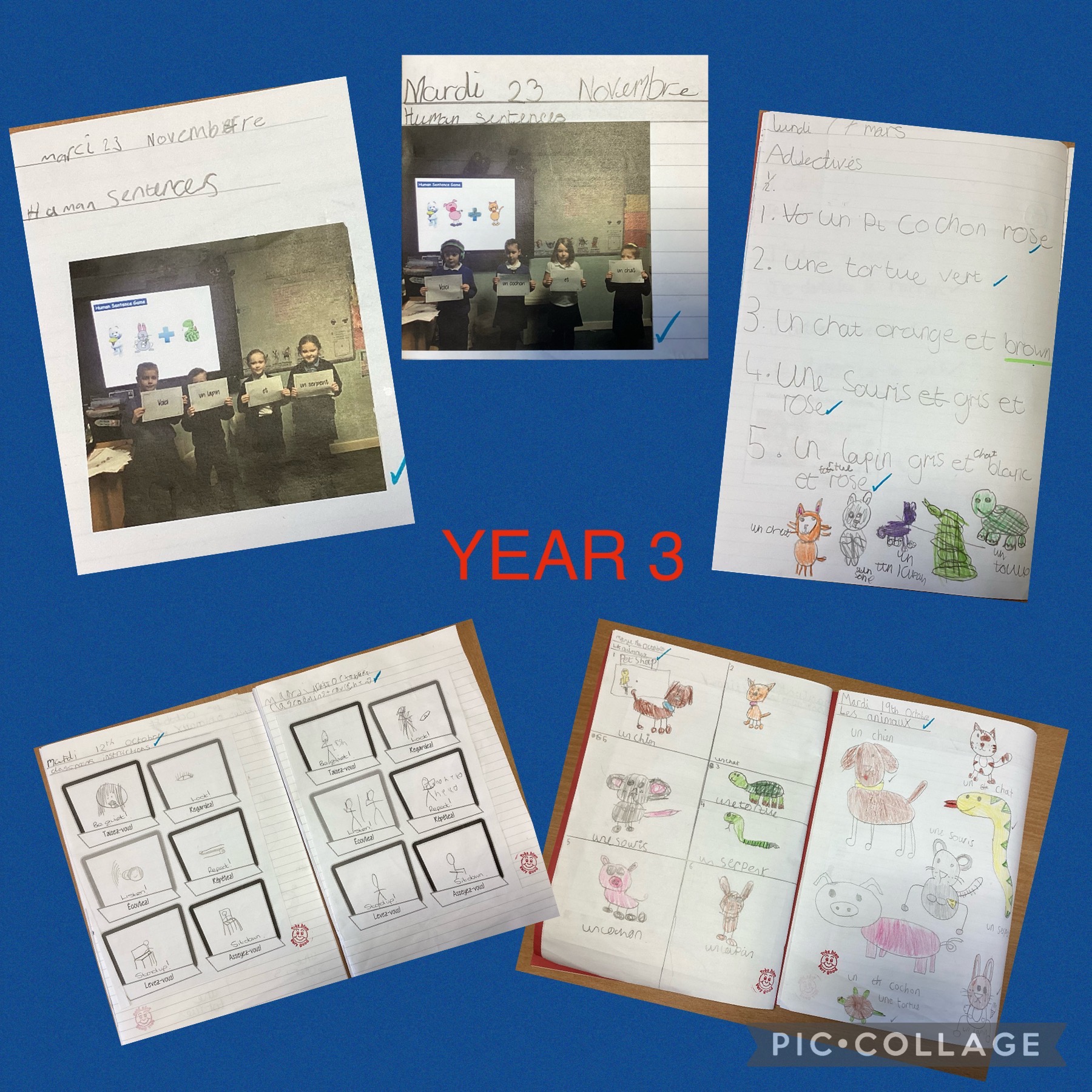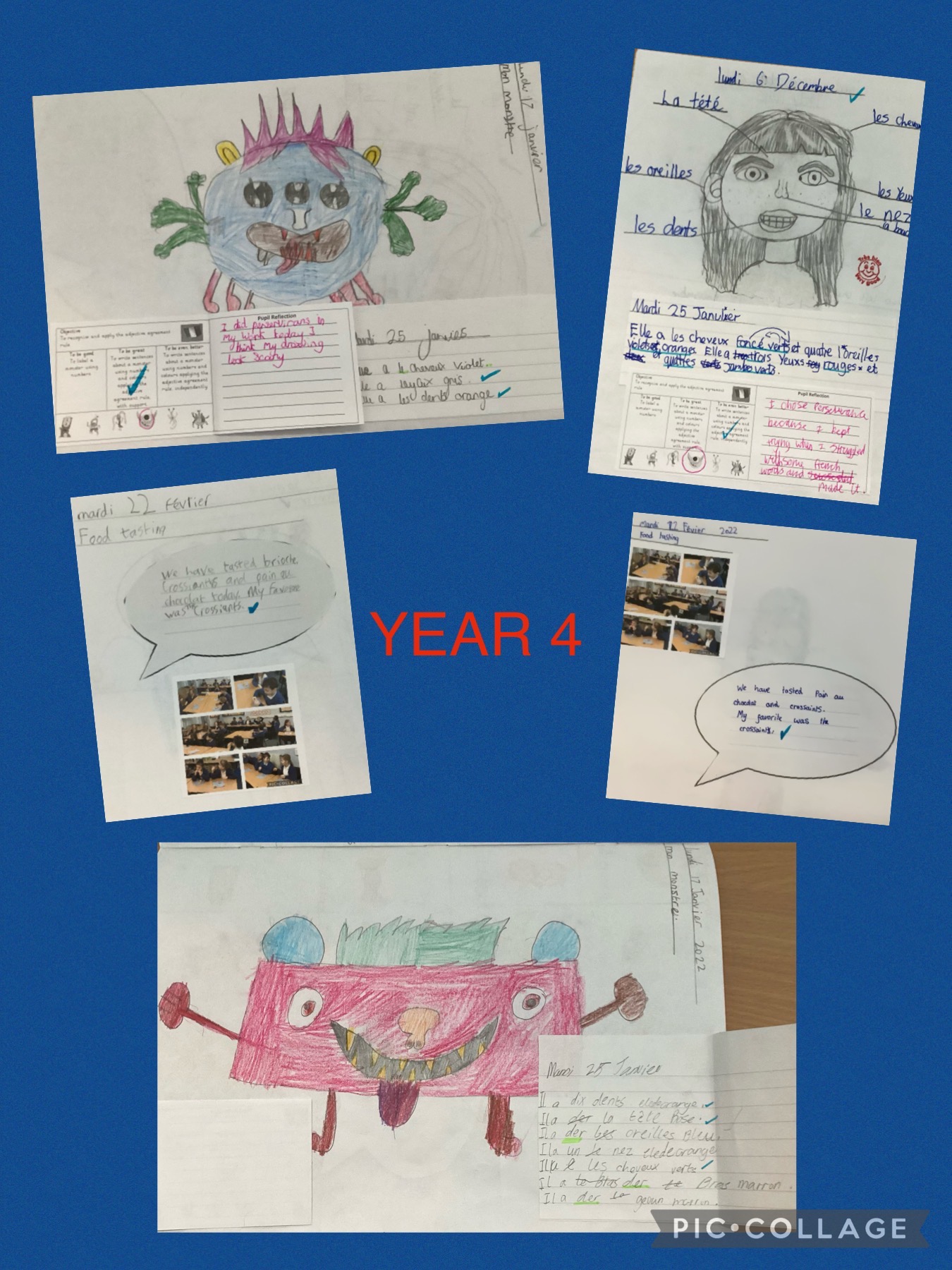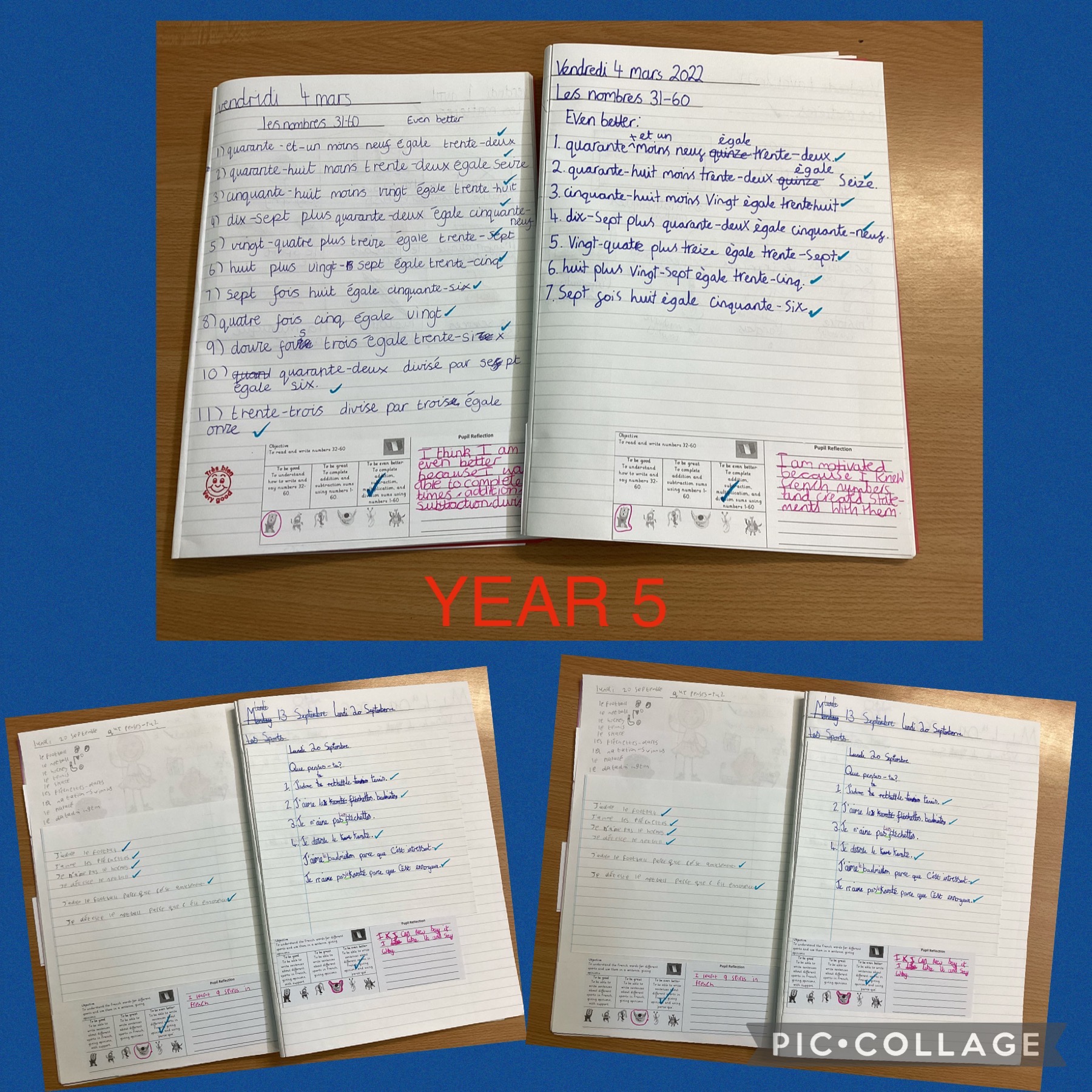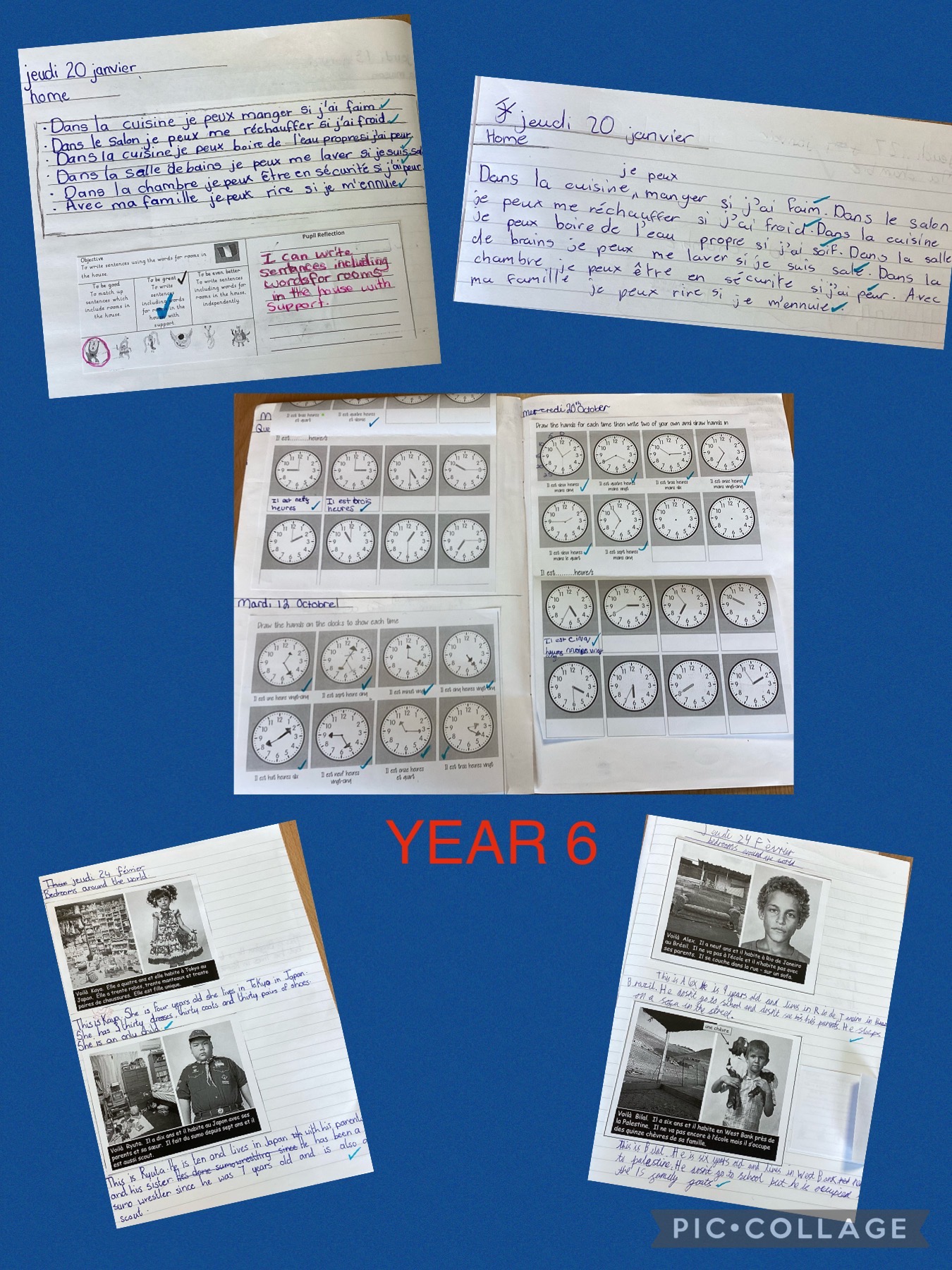
Our curriculum is based on what we know is best for our pupils. Every pupil matters and all are afforded the opportunity to grow and succeed. Our curriculum is coherently planned to meet the unique & differing needs of all our learners; academically and personally. We strive to ensure our pupils deepen their knowledge and enhance their skills to progress and as a result are equipped for the next stage of their learning.
We are relentless in our pursuit to ensure pupils develop a passion for reading and acquire an ambitious, working vocabulary. A key factor of our curriculum design is to ensure pupils develop independence and resilience.
Commitment to our pupils is fulfilled through our high aspiration, passion and drive to ensure all our pupils participate in varied rich learning experiences within the school community and beyond.
Subject Pages

Reading

Writing

Maths

SPAG

Science

PE & Sport

Computing

DT

History

Geography

Music

Art

British Values

PSHE

Religion & World Views

French

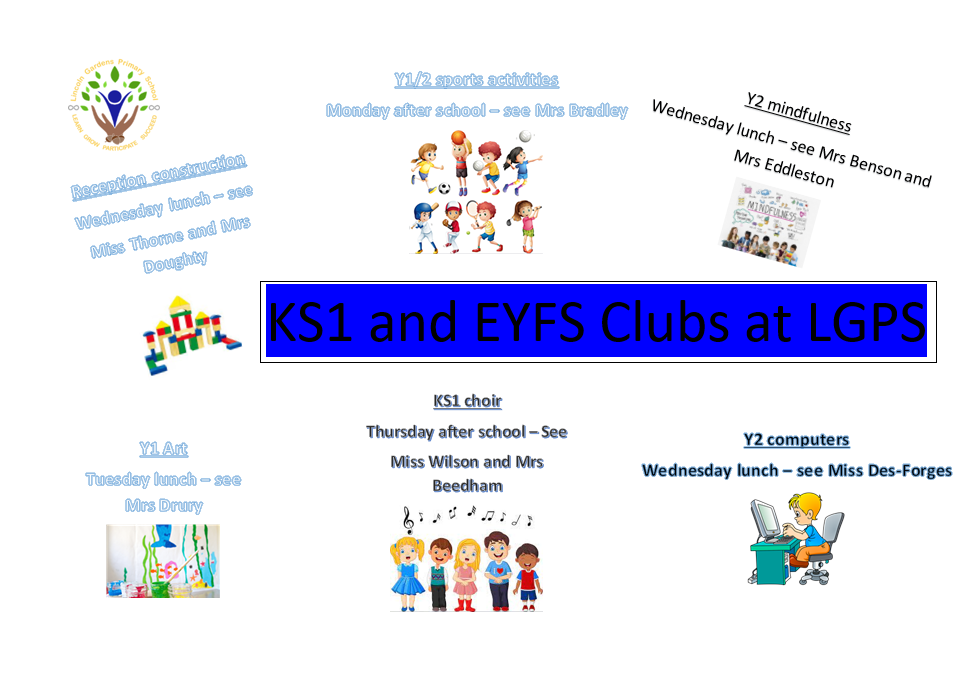
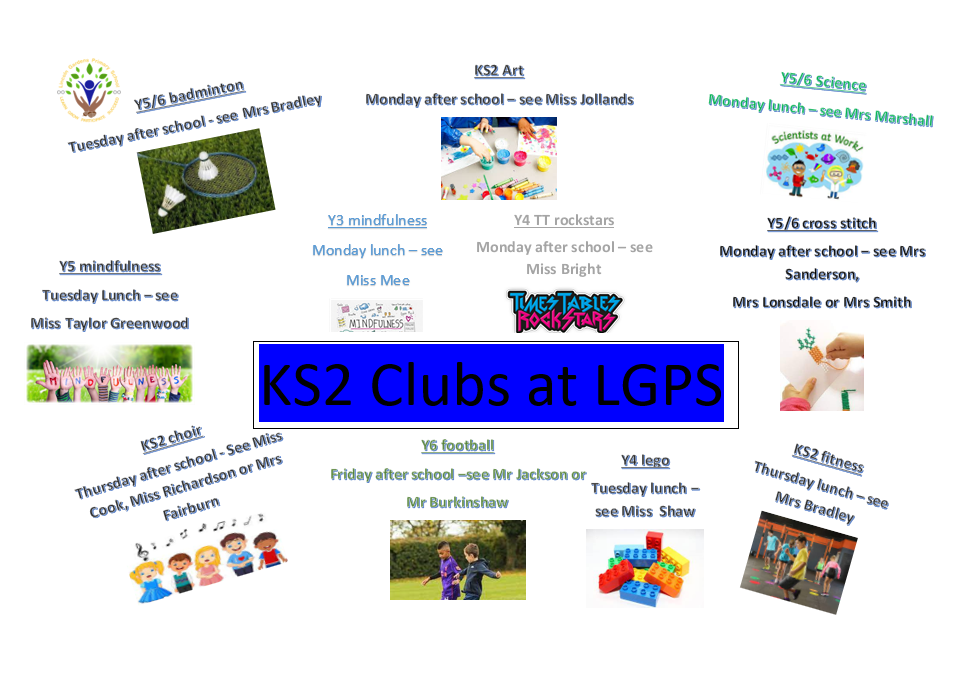
Clubs
Nursery
Downloads
Autumn 1
Autumn 2
Spring 1
Summer 1
Information
A very warm welcome to the Acorns!
Please can we ask that your child continues to bring a water bottle each day and a bag with a spare change of clothes in case of accidents.
PE Information
Physical development is an important part of the EYFS curriculum and is planned for on a daily basis both inside and outdoors. We also make use of the school hall to play games and explore a range of PE equipment. Children do not require a PE kit for these sessions.
Extended Learning
Sharing daily stories with your child is a great way to encourage a love of reading from a young age. You may already be signed up to ‘The Imagination Library’ but please let us know if you need help with this. Encouraging your child to count and sort objects in the home and recognise numbers in everyday contexts will also support their developing maths skills.
Theme
Our theme for this half-term is called, ‘Growing and Changing’. We will be learning about the changes which happen in spring and also how plants frow. We will begin with the story of ‘Jasper’s Beanstalk’. Alongside our theme, we will follow the interests and developing skills of the children.
If you have any questions or concerns, please speak to us at nursery or alternatively, e-mail us at acorns@lincolngardens.net
We look forward to getting to know you!
Many thanks
Mrs Salmon
Reception
Downloads
Autumn 1
Autumn 2
Spring 1
Spring 2
Summer 1
Information
A warm welcome to Reception.
PE Information
We will be continuing to get changed for PE. Please ensure that all kit has your child’s name inside and is brought to school every Monday for Pears and Tuesday for Apples. Please refer to the uniform policy to ensure the correct kit is worn.
Extended Learning
Reading at home (at least 4 or more times) Your child has now received a reading book and a reading diary, please ensure that you sign the reading diary so we can see how many times your child has read.
Books will be changed every Friday.
Theme
Our Summer term, from now until the May break, is all about celebrating how amazingly well the children are doing with their reading. We will be helping them to use their phonics/reading skills to read a variety of different stories and building up their confidence and fluency. We will be learning about how stories are structured and the language commonly used. We will also be learning lots about the world around them as we move into the warmer weather and we will be focussing on the changes they can see in their local environment.
If you have any questions or concerns, please contact any of the Reception team.
Apples—Miss Thorne email: apples@lincolngardens.net
Pears—Miss Wilson email: pears@lincolngardens.net
Year 1
Downloads
Autumn 1
Autumn 2
Spring 1
Spring 2
Summer 1
Information
A warm welcome to Year 1.
PE Information
This term, your child’s PE lessons will be on a Tuesday afternoon and Friday morning. Please ensure that both indoor and outdoor kits are available for both days and please refer to the uniform policy to ensure the correct kit is worn.
Extended Learning
Your child will be expected to complete weekly tasks throughout year 1.
These will be:
- Reading at home (at least 4 or more times, this will be recorded in school)
- Spelling assignments on Spelling Shed (login details are in your child’s reading diary)
- A project will be sent out each half term linking to our topic and the learning that has taken place.
Theme
Our Summer 1 topic is Plants. Our WIW event will involved
If you have any questions or concerns, please contact any of the year 1 team.
Yew 1 Mrs Bright
Email address – yew1@lincolngardens.net
Yew 2 Miss Jollands
Email address – yew2@lincolngardens.net
Year 2
Downloads
Autumn 1
Autumn 2
Spring 1
Spring 2
Summer 1
Information
Welcome to Year 2.
PE Information
This half term the children will have PE lessons on Wednesdays and Fridays. Please ensure that both indoor and outdoor kits are available and please refer to the uniform policy to ensure the correct kit is worn. We will be doing some lessons outside, so please ensure that jogging bottoms and warm tops are included in the children’s kit.
Extended Learning
For extended learning, your child will be expected to complete weekly tasks. These will be:
- Reading at home—four or more times a week
- Completing reading and maths homework tasks weekly
- Practising times tables – 2x, 5x, 10x and 3x
Theme
Our exciting new topis is ‘The First Flight’! We can’t wait to start discovering fascinating facts about the Wright Brothers, Amelia Earhart and Amu Johnson and the role they have played in history. We will be learning more about the area around us and why it is particularly good to fly from, what adventures will we encounter this half term!
If you have any questions or concerns, please contact any of the Year 2 team.
Ash 1— Miss Ogg
Email address – ash1@lincolngardens.net
Ash 2 — Miss Byrne
Email address – ash2@lincolngardens.net
Year 3
Downloads
Autumn 1
Autumn 2
Spring 1
Spring 2
Summer 1
Information
Welcome to Year 3.
PE Information
This year, your child will be doing PE on a Monday and Thursday. Ensure that both indoor and outdoor kits are available for both days and please refer to the uniform policy to ensure the correct kit is worn.
Extended Learning
For extended learning, your child will be expected to complete weekly tasks. These will be:
- Reading at home (at least 4 or more times)
- TT Rockstars
- Spelling Shed
We will also be sending home arithmetic tests for your child to practise at home and speed reading to work on building fluency or a short comprehension task. These will be sent home fortnightly.
Theme
Our Summer term topic is ‘Ancient Egyptians’. This topic will run through all of our subjects from reading and writing, to history, geography and art. Please see the curriculum web for more information.
If you have any questions or concerns, please contact any of the year 3 team.
Fir 1 – Mr Burkinshaw
Email address: fir1@lincolngardens.net
Fir 2 – Miss Shaw
Email address: fir2@lincolngardens.net
Year 4
Downloads
Autumn 1
Autumn 2
Spring 1
Spring 2
Summer 1
Information
Welcome to Year 4.
PE Information
This term, your child will be doing PE on a Tuesday and Wednesday. Please ensure that on PE days, both indoor and outdoor kits are available for both days and refer to the uniform policy to ensure the correct kit is worn.
Extended Learning
For extended learning, your child will be expected to complete weekly tasks. These will be:
- Reading at home (at least 4 or more times)
- TT Rockstars and Mathsframe
- Spelling via Spelling Shed
- Extended Learning Grid
- Weekly maths and English homework
Theme
Our Summer term topic is ‘water, water everywhere’. This topic will be linked to all of our subjects from Reading and Writing and Science! Please see the curriculum map for more information.
If you have any questions or concerns, please contact any of the Year 4 team.
Elm 1 – Mrs Eddleston (Monday-Thursday) and Mrs Benson (Friday)
Email address –elm1@lincolngardens.net
Elm 2 – Mrs Bywater
Email address –elm2@lincolngardens.net
Year 5
Downloads
Autumn 1
Autumn 2
Spring 1
Spring 2
Summer 1
Information
Welcome to Year 5
PE Information
Year 5 will have PE on Mondays and Wednesdays. Ensure that both indoor and outdoor kits are available for both days and please refer to the uniform policy to ensure the correct kit is worn. If your child cannot take part in a PE lesson for any reason, please send a note in to the class teacher or contract the school office.
Extended Learning
For extended learning, your child will be expected to complete weekly tasks. These will be:
- Reading at home
- TT Rockstars
- Spelling via Spelling Shed
- A piece of Maths and Reading homework
If your child completes any additional work at home, we would love to see what they have been working on!
Theme
Our Summer term is going to be based around the topic of Brazil. The main focus will be on the human and physical features of Brazil. We will also be completing a comparison study of Brazil versus our local area here in Scunthorpe, UK!
If you have any questions or concerns, please contact any of the year 5 team.
Bay 1— Mrs Benson (Monday & Tuesday) and Miss Cook (Wednesday – Friday)
Email address –bay1@lincolngardens.net
Bay 2—Mr Stevenson
Email address –bay2@lincolngardens.net
Year 6
Downloads
Autumn 1
Autumn 2
Spring 1
Spring 2
Summer 1
Information
Welcome to Year 6.
PE Information
This year, your child will be doing PE on a Tuesday and Wednesday. Ensure that both indoor and outdoor kits are available for both days and please refer to the uniform policy to ensure the correct kit is worn.
Extended Learning
For extended learning, your child will be expected to complete weekly tasks. These will be:
- Reading at home at least 4 or more times (reading books and diaries should be in school every day)
- TT Rockstars
- Spelling via Spelling Shed (spelling tests are every week)
- A piece of Maths and Reading homework in their homework books.
Theme
The children are starting their summer term topic entitled ‘The Show Must Go On!’ During this topic the children will study the famous William Shakespeare and how his works have shaped and impacted on modern day life. The children will be putting their artistic talents on show too by putting together their very own musical where they will act, sing and even share a few dance moves.
If you have any questions or concerns, please contact any of the year 6 team.
Oak 1— Mrs Dalgleish
Email address – oak1@lincolngardens.net
Oak 2— Miss Taylor
Email address – oak2@lincolngardens.net
Reading
Downloads
Curriculum
Intent
It is our Intent that all children leave as confident, passionate readers. We are determined to ensure that our pupils are able to speak, read and write fluently so that they can succeed in future life. We prioritise the importance of early reading by delivering a robust phonics programme in the Early Years and Key Stage 1, this is paired with a reading scheme which supports the application of phonics. Through thorough tracking we ensure that no child is left behind; those few pupils who find learning to read a challenge are supported through quality first teaching. It is our intention that all children develop a love of reading; we encourage children to read widely across a range of genres for pleasure and to support their learning across the curriculum.
The ability to read is fundamental to many aspects of life, and is central to general progress & developing an understanding in a wide range of areas across the curriculum. The teaching of reading is to be given a high priority by all staff. Success in reading is crucial in developing children’s self-confidence and motivation to learning in general.
Planning
The school’s curriculum objectives for reading will be reflected in long term, medium term and short term planning. In all plans there should be careful consideration for activities which are well matched to the range of ability.
Short term plans will list specific objectives for each lesson and give details of how the lessons are to be taught including challenge activities for the more able pupils and activities for those who are underachieving.
Teachers in the Foundation Stage work to the objectives set out in the Early Learning Goals which underpin their curriculum planning. Later, during the Foundation Stage year, the National Curriculum is used alongside the Early Learning Goals to ensure continuity and progression from one framework to the other. All National Curriculum Programmes of Study statements must be covered at least once in each key stage.
Teaching and Learning
As for all areas of the curriculum, imaginative and challenging activities together with varied approaches, such as discussion, trying out ideas or working with others, are needed to engage, maintain and respond to pupils’ interests.
Teaching assistants have a vital role to play. They should not be expected to take sole responsibility to support pupils with low levels of achievement (this is without question the role of the class teacher) but to observe, assess and support pupils from all ability groups.
There will be plenty of opportunities to forge strong links between plans for reading activities and those for writing, speaking and listening. In the same way that ‘talk’ can be used to prepare for and help improve children’s writing, so too it can be used to improve children’s level of understanding of a text. We actively encourage opportunities for children to talk in pairs or small groups to broaden their understanding of the text.
Foundation Stage
In the Foundation Stage children should be given opportunities to become immersed in an environment rich in print and possibilities for communication. They use communication, language and literacy in every part of the curriculum, and they are given opportunities to speak and listen and represent ideas in their activities.
Reading stories from big books enables the children to see how books and stories work. Systematic synthetic phonics and knowledge of high frequency words, taught on a daily basis, are key features of the best practice which should lead to success in reading decodable texts from an early age.
Key Stage 1
In Key Stage One, we aim to continue the learning from EYFS so that children begin to read a range of texts independently and with enthusiasm. Guided Reading represents an important means to improve the knowledge, skills and understanding of reading.
Key Stage 2
In Key Stage Two, children should read a range of texts and respond to different ‘layers’ of meaning, both literal and inferential. They should explore the use of language in a variety of texts. Guided and Shared Reading represent important tools in this key stage.
Children in EYFS plus years 1 and 2 will be taught phonic skills through Read, Write Inc. Where needed this will continue into key stage 2. The school will ensure the children have a choice of both fiction and non-fiction texts, reflecting different cultures and gender choices. There will also be books relevant to the topic/theme being studied each term. Teaching strategies aim to enhance children’s motivation and involvement in reading and to develop their skills through the following:
- Reading with other children
- Reading with an adult
- Shared Reading
- Guided Reading (see below)
- Reading aloud (child and adult)
- Independent reading
- Questioning
- Building phonic skills
- Comprehension Activities
- Tasks related to the text
Our reading books include a range of commercially produced schemes which are supplemented with a range of hard back & paperbacks. The reading schemes give children the opportunity to practise their developing reading skills with texts which have appropriate vocabulary and sentence structure related to assessment focuses.
Children will also have access to a range of other books, with varying levels of difficulty, which they will be encouraged to read for pleasure and information.
Children are also taught to read ‘High Frequency Words’ out of context and Y1 need to be able to read nonsense words for the ‘phonics check’ which takes place during the summer term.
All children will have access to the key stage collections of books enabling them to periodically choose non scheme books in agreement with the class teacher.
Children will be taught in their normal class groups and within the timetable there will be weekly Guided Reading sessions.
Materials and resources to support pupils are available to teachers and teaching assistants to help children.
Enrichment activities are used across the school to foster a love of reading, these include:-
- Visits from authors
- Activities linked to World Book Day
- Themed events
- Scholastic Book fayre
Links with other areas of the curriculum
There will be additional time outside of the English Lesson to develop reading skills across different areas of the curriculum. The teaching of reading develops skills through which our children can give critical responses to the questions they meet in their learning for science, geography, history, PSHE & other subject areas. Their understanding and appreciation of a range of texts should bring them into contact with their own literary heritage and texts from other cultures. The organisation of lessons will allow children to work together and provide them with an opportunity to discuss their ideas.
ICT Provision
The use of ICT will be incorporated into the teaching of reading for specific reading skills and activities, accommodating all ability levels. When planning reading related activities, teachers will consider the available digital resources in school.
The extensive use of ICT will involve children in reading a range of text types for a number of purposes.
Where needed children will also have access to Lexia, this can be used to support phonics and to stretch and challenge more able children’s understanding of how our language is made up.
Assessment and Record Keeping
Foundation Stage
In the Foundation Stage we keep a record of each child’s phonics skills, detailing which sounds and high frequency words are recognised by the child. Later in the year, records for guided reading indicate how well children’s accuracy, fluency and understanding are developing. Teacher and EYP records of child initiated and teacher led activities are recorded to indicate progress against early learning goals and Foundation Stage criteria.
The progress of individual children will be discussed at termly Parent consultations
Key Stage 1
In Key Stage 1 we keep a record of each child’s phonics skills, detailing which sounds and high frequency words are recognised by the child. Children’s reading skills, related to a child’s progress, are, in the main, recorded during Guided Reading sessions. This is supported by end of term reading assessments and SATs for Y2.
We also keep records to show progress with the colour coded graded reading books. The progress of classes and individual children will be discussed at Parent consultations.
Key Stage 2
Reading will be assessed in Standard Assessment Tasks. Continuous assessment of the strategies employed by the child, during independent reading sessions are ongoing in addition end of term reading assessments will be used. The progress of individual children will be discussed at termly consultations.
In addition we use termly NFER reading assessments to ensure children are on track and those not making the required progress are given targeted support.
Intervention Support
During each key stage the assessment of individual pupils’ progress, including phonic knowledge and skills, is sufficiently frequent and detailed to identify the pupils who are failing to keep up with their peers. Effective provision for them to catch up is put in place as early as possible.
Home Learning/Involving Parents
Throughout the primary years parents are encouraged to play a vital role in their child’s reading development and we must use all possible approaches to demonstrate ways in which they can foster a love of reading in their children. Children will take home books to share and enjoy with their parents. A home/school reading diary will accompany their books with parents being encouraged to comment on their child’s progress and response to the book.
Arrangements for taking books home to read are as follows:
EYFS – graded reading books, HFW word lists and a free choice book from the library
KS1 – graded reading books together with free choice books from the class library are expected to read with their parents 4 times a week. Reading log books are used to record the pages read together with a comment from the parent.
KS2 children are expected to read at home at least 4 times a week. Reading log books are used to record the pages read together with a comment from either the child or parent. The log books are monitored by the class teacher/TA. In the main the children take home books from the free choice collection but the class teacher will also encourage children to choose from other collections such as news papers. Each half term a teacher will monitor the children’s progress on the NFER tests to identify those children who have not made sufficient progress.
Parents are informed about their child’s progress in reading at parent teacher consultations, held mid-way through the autumn and spring terms, and in the annual report.
Guided Reading
Planning and teaching guided reading is an extremely effective approach to teaching specific reading skills and is a crucial component of our reading policy. This practice can be used, not only as a discrete activity to focus on key skills from the long term objectives, but also to link reading and literacy with specific genres and other areas of the curriculum. We teach guided reading sessions on a weekly basis to:
- support children to make progress in reading
- motivate children to read and discuss texts, in pairs or small groups with a teacher/teaching assistant
- encourage other children to work independently of the teacher and the teaching assistant
- provide effective differentiation, including challenge for the more able children
- demonstrate how children can read, enjoy and analyse a range of texts.
Role of the Reading Leader
It is the responsibility of the Reading leader in liaison with the class teacher to:
- monitor the implementation and effectiveness of guided reading
- review assessment data to track progress in all classes
- audit and organise reading resources within the key stage to ensure we have the best materials available to teach children to read
- plan and oversee training and support for teaching assistants as necessary
- keep up to date with current good practice and pass on information to colleagues
- ensure that the school’s long term objectives translate to medium and short term plans
Equal Opportunities
We will ensure all children have equal access to the curriculum, regardless of gender, race or ability. Children with specific reading, speech and hearing difficulties will be identified and supported through intervention programmes in school.
The books which our children read will be chosen carefully so that issues related to equal opportunities are handled sensitively.
The interests of individual children will be taken into consideration when reading activities and materials are selected.
We will ensure that the books and literature available to children represent as wide a range of cultures as possible.
Writing
Downloads
Curriculum
At Lincoln Gardens Primary School, we recognise the crucial importance of studying the English language. Improved performance at reading, writing and spoken language will enable our pupils to express their thoughts and ideas more fluently, accurately and, ultimately, to their greater satisfaction. This will also help them to deal more successfully with other curriculum subjects, while enriching their lives beyond school. The teaching and learning of language skills are, therefore, given a high priority in our school and where possible the creative curriculum and ICT will be used as tools. We understand the importance of the link between reading and writing and, wherever possible, use high quality texts as a starting point for children’s writing.
When teaching writing, our aim is to promote high standards of language and literacy by equipping pupils with a strong command of the spoken and written word.
We aim for our pupils to:
- acquire a wide vocabulary, an understanding of grammar, and knowledge of linguistic conventions for reading, writing and spoken language
- write clearly, accurately and coherently, adapting their language and style in and for a range of contexts, purposes and audiences
Intent
Our writing curriculum is based on what we know is best for our pupils. Writers will develop the stamina and skills to write at length, with accurate spelling and punctuation. They will be taught the correct use of grammar. They will build on what they have been taught at every stage of their learning to expand the range of their writing and the variety of the grammar they use. The teaching of writing is linked to quality texts to expand the children’s vocabulary while providing inspiration for their own pieces. They will be given opportunities to write for a variety of purposes linked to the wider curriculum, and write a range of genres incorporating a breadth of fiction, non-fiction and poetry. We believe that a secure basis in writing skills will give our children the tools they need to participate fully as a member of society.
Coverage and Progression
Statutory requirements for the teaching and learning of English are laid out in the National Curriculum in England: Framework Document (2014). The full programme of study can be found on the DfE National Curriculum website.
The programmes of study for writing at key stages 1 and 2 are:
- transcription (spelling and handwriting)
- composition (articulating ideas and structuring them in speech and writing)
Teaching will develop pupils’ competence in these two dimensions. In addition, pupils are taught how to plan, revise and evaluate their writing.
A whole school overview for the coverage and progression of the teaching of writing has been created and teaching staff follow this within year groups.
Teaching and Learning Styles
In EYFS through to Year 6, children are taught English within their classes. Through quality first teaching, differentiation and the support of additional adults, all children will receive high quality teaching and appropriate support in order for every child to reach their full potential.
Children may receive additional targeted support if necessary outside of the English lessons, for example, to work on targets from their SEND plans. A clear lesson objective and success criteria are a feature of all English lessons. Working walls support learning in the classrooms and are updated to reflect the current writing unit. Evaluative marking is used, following the school’s marking and feedback policy, and children are given time to respond to feedback. Assessment informs planning and reference is made to the National Curriculum in medium term plans. We encourage children to use ICT as a resource for learning, whenever appropriate. We provide a rich and varied experience for pupils to draw on in their writing which should include the whole curriculum. Where possible, links are made to foundation subjects, half-termly or termly themes, and high quality texts which are used as whole class reading books and during reading lessons.
To develop our children as writers we:
- treat children as writers, from the earliest stage, who have ideas that they will want to communicate, building on writing skills they have acquired and their knowledge of print from their environment.
- provide experiences where the children can acquire confidence and a positive attitude to writing.
- develop and sustain writing skills by providing opportunities for children to write for a range of purposes and audiences.
- use shared and guided writing sessions to model writing skills, teaching children how to compose, amend and revise their writing.
- teach children to become critical readers of their own writing by using self-evaluation and checking their work independently for sense, accuracy and meaning.
- teach grammar and punctuation in the context of children’s own writing, as well as through discrete lessons.
- teach children to develop their ability to organise and present imaginative and/or factual writing and poetry in different ways.
- teach strategies for spelling to enable children to become confident and competent spellers.
Handwriting
Handwriting begins in EYFS with mark-making and patterns. All pupils are given access to a wide range of writing tools and mediums to practise the early fine motor skills.
Handwriting is taught using the Achieving Excellence in Handwriting programme by Martin Harvey. Further details about the school’s teaching of handwriting can be found in the school’s handwriting policy and the Achieving Excellence in Handwriting document.
SEND and Inclusion
We aim to provide for all children so that they achieve as highly as they can in English according to their individual abilities. We identify which pupils or groups of pupils are under-achieving and take steps to improve their attainment. More able children are identified and suitable learning challenges provided.
- Children with identified SEND in English receive targeted support.
- Children with English as an additional language are supported within school and by external support from EMTAS, working on targets set by class teachers.
- Children who are identified as having additional needs with reading, receive extra support and one-to-one reading sessions in school.
- More able children in English are identified and challenged appropriately in lessons.
Equal Opportunities
All children are provided with equal access to the English curriculum. We aim to provide suitable learning opportunities regardless of gender, ethnicity or home background.
Enrichment
Teachers seek to take advantage of opportunities to make cross-curricular links where relevant. They plan for pupils to practise and apply the skills, knowledge and understanding acquired through English lessons to other areas of the curriculum.
Challenges for more able pupils are provided within English lessons or in addition through a range of wider opportunities e.g. More Able Writers Days.
Authors and poets are invited into school to develop children’s passion for writing.
Key Stage 2 children are offered the opportunity to join the Spelling Shed club to practise spelling patterns following the school’s scheme.
Assessment and Recording
Work is assessed in line with the Assessment Policy.
Teachers use feedback on pieces of writing in order to identify where children have included elements of the success criteria (which are highlighted in blue), set next steps and areas for development (which are highlighted in green) and to give children the opportunity to revisit their work in order to make improvements. Children’s editing and improvements are written in purple pen.
Summative assessment is recorded three times a year in order to assess the children’s progress in writing.
Independent writing assessments are completed in Assessed Writing books. Each year group completes two fiction, two non-fiction and one poetry assessed piece each term. Teacher assessment grids are used by each year group to assess each piece of independent writing. Teachers then provide children with areas of strength and targets for their next piece of writing through their feedback.
Internal moderation is completed termly by the writing subject leader.
Teacher assessment for writing in Year 2 and Year 6 is submitted to the Standards and Testing Agency during the summer term.
Monitoring and Review
The English curriculum team are responsible for improving the standards of teaching and learning in writing through the monitoring and evaluation of the subject.
This will involve:
- checking that assessment for writing is carried out in line with the school’s policy
- monitoring of pupil progress
- discussions with pupils regarding writing
- analysing data
- monitoring the provision of writing
- taking the lead in policy development
- auditing and supporting colleagues in their CPD
- purchasing and organising resources
- keeping up to date with recent English developments
- analysis of SATs results to identify areas for development
Maths
Downloads
Links
Curriculum
Intent
Our Maths curriculum is based on what we know is best for our pupils. In maths it our intention to teach a rich, balanced and progressive curriculum which challenges all children to make rich connections across mathematical ideas and understand how essential maths is in everyday life. There is a high emphasis on ensuring children have the necessary key mathematical facts embedded in the long term memory allowing them to become fluent in performing key mathematical processes. Children are given varied opportunities to think logically and flexibly to develop sound mathematical arguments and agreements through reasoning activities using appropriate mathematical vocabulary. The children’s ability to solve problems is nurtured during lessons through exposure to a variety of strategies to ensure the children become well-rounded mathematicians.
National Curriculum
The National Curriculum for mathematics aims to ensure that all pupils:
- become fluent in the fundamentals of mathematics, including through varied and frequent practice with increasingly complex problems over time, so that pupils have conceptual understanding and are able to recall and apply their knowledge rapidly and accurately to problems
- can reason mathematically by following a line of enquiry, conjecturing relationships and generalisations, and developing an argument, justification or proof using mathematical language
- can solve problems by applying their mathematics to a variety of routine and non-routine problems with increasing sophistication, including breaking down problems into a series of simpler steps and persevering in seeking solutions.
Coverage and Progression
To ensure the mathematics curriculum is covered across the school, the White Rose Maths Hub schemes of learning are followed in line with the National Curriculum expectations for each key stage across the school.
https://whiterosemaths.com/resources/primary-resources/primary-sols/
Foundation Stage
The programme of study for the Foundation stage is set out in the EYFS Framework 2014. Mathematics involves providing children with opportunities to develop and improve their skills in counting, understanding and using numbers, calculating simple addition and subtraction problems; and to describe shape, spaces and measures.
Key Stage 1 & 2
The Programmes of study for mathematics are set out year by year for Key Stages 1 and 2 in the new National Curriculum (2014). The programmes of study are organised in a distinct sequence and structured into separate domains. Pupils should make connections across mathematical ideas to develop fluency, mathematical reasoning and competence in solving increasingly sophisticated problems. By the end of each key stage, pupils are expected to know, apply and understand the matters, skills and processes specified in the relevant programme of study.
Key Stage 1
The principal focus of mathematics teaching in Key Stage 1 is to ensure that pupils develop confidence and mental fluency with whole numbers, counting and place value. This should involve working with numerals, words and the four operations, including with practical resources (e.g. concrete objects and measuring tools). At this stage, pupils should develop their ability to recognise, describe, draw, compare and sort different shapes and use the related vocabulary. Teaching should also involve using a range of measures to describe and compare different quantities such as length, mass, capacity/volume, time and money.
By the end of Year 2, pupils should know the number bonds to 20 and be precise in using and understanding place value. An emphasis on practice at this early stage will aid fluency. Pupils should read and spell mathematical vocabulary, at a level consistent with their increasing word reading and spelling knowledge at Key Stage 1
Lower Key Stage 2
The principal focus of mathematics teaching in lower Key Stage 2 is to ensure that pupils become increasingly fluent with whole numbers and the four operations, including number facts and the concept of place value. This should ensure that pupils develop efficient written and mental methods and perform calculations accurately with increasingly large whole numbers.
At this stage, pupils should develop their ability to solve a range of problems, including with simple fractions and decimal place value. Teaching should also ensure that pupils draw with increasing accuracy and develop mathematical reasoning so they can analyse shapes and their properties, and confidently describe the relationships between them. It should ensure that they can use measuring instruments with accuracy and make connections between measure and number.
By the end of Year 4, pupils should have memorised their multiplication tables up to and including the 12 multiplication table and show precision and fluency in their work. Pupils should read and spell mathematical vocabulary correctly and confidently, using their growing word reading knowledge and their knowledge of spelling.
Upper Key Stage 2
The principal focus of mathematics teaching in upper Key Stage 2 is to ensure that pupils extend their understanding of the number system and place value to include larger integers. This should develop the connections that pupils make between multiplication and division with fractions, decimals, percentages and ratio. At this stage, pupils should develop their ability to solve a wider range of problems, including increasingly complex properties of numbers and arithmetic, and problems demanding efficient written and mental methods of calculation. With this foundation in arithmetic, pupils are introduced to the language of algebra as a means for solving a variety of problems. Teaching in geometry and measures should consolidate and extend knowledge developed in number. Teaching should also ensure that pupils classify shapes with increasingly complex geometric properties and that they learn the vocabulary they need to describe them.
By the end of Year 6, pupils should be fluent in written methods for all four operations, including long multiplication and division, and in working with fractions, decimals and percentages. Pupils should read, spell and pronounce mathematical vocabulary correctly.
Teaching and Learning
Across the school from EYFS through to Year 6, children are taught Mathematics within their classes. Through quality first teaching, differentiation, additional adult support within the lesson and bespoke targeted support outside the lessons all children receive the necessary support to reach their true potential.
In each lesson, a clear lesson objective and layered success criteria are used. Working walls in every classroom are used to support current and previous learning through the promotion of key mathematical vocabulary and key subject sticky knowledge. The school’s marking and feedback policy is used to ensure children are provided with constructive feedback to allow all children to progress and time is given for all to respond to feedback. No matter what the ability, we encourage the use of a variety of manipulatives to aid understanding of mathematical concepts.
Maths planning and sequencing of lessons with include the four key areas of maths: fluency, varied fluency, reasoning and problem solving. Every maths lesson starts with 5 minutes counting and 5 minutes arithmetic. There will also be a daily sticky knowledge task which gives children the opportunity to revisit the key mathematical concepts previously taught.
Arithmetic is a vital element of the maths curriculum which provides children in becoming fluent at performing key mathematical processes. To promote this, every year group will deliver one lesson per week solely focused on arithmetic. Targeted support groups will be taught prior to a test taking place. The emphasis to the children will be about progress and bettering their previous score as every child, no matter what their starting point, are encouraged to make progress.
Every child has their own TT Rockstars account to develop multiplication recall and years 3 and 4 have additional lessons to focus on this fundamental skill.
Staff use a variety of resources to enable them to deliver the maths curriculum in an engaging and stimulating way such as Nrich, MathsFrame, Testbase, Target Maths, Classroom secrets, NCETM, Abacus books. This allows children the opportunity to view maths in different ways so they don’t become familiar to one style of questioning.
SEND and Inclusion
We aim to provide for all children so that they achieve as highly as they can in Mathematics according to their individual abilities and starting points. Through half termly pupil progress meetings, pupils or groups of pupils who are under-achieving are targeted and necessary targeted support is put in place to help improve their attainment. More able children are identified and suitable learning challenges provided.
- Children with identified SEND in Mathematics receive targeted support.
- Children who are identified as having additional needs with mathematics, receive extra support and one-to-one reading sessions in school.
- More able children in mathematics are identified and challenged appropriately in lessons
Equal opportunities
All children are provided with equal access to the maths curriculum. We aim to provide suitable learning opportunities regardless of gender, ethnicity or home background.
Enrichment
- Teachers seek to take advantage of opportunities to make cross-curricular links where relevant. They plan for pupils to practise and apply the skills, knowledge and understanding acquired through maths lessons to other areas of the curriculum.
- Challenges for more able pupils are provided within maths lessons or in addition through a range of wider opportunities e.g. More Able Maths Days.
- Key Stage 2 children are offered the opportunity to join the TT Rockstars club to practise spelling patterns following the school’s scheme.
- Annual Number Day
- Maths Week
Assessment and recording
Work is assessed in line with the Assessment Policy. Formative assessment is done daily through daily marking of maths work in line with the marking policy and the regular completion of FFT Aspire.
Children are teacher assessed half termly using FFT Aspire.
Summative assessment is completed every term through the use of NFER tests. The results of these, alongside teacher judgement, provide termly assessment. In year 6, the children are assessed half termly using previous SATS papers and question level analysis after these tests provide valuable information on next steps in learning. Year 2 follow the same as year 6 but only when they are ready to start completing the papers.
Monitoring and review
The maths curriculum team are responsible for improving the standards of teaching and learning through the monitoring and evaluation of the subject.
This will involve:
- analysis of SATs results to identify areas for development
- Half termly pupil progress meetings
- analysing data
- half termly book scrutiny
- Formal lesson observations
- Termly pupil voice
- Termly staff voice
- Taking the lead in policy development
- purchasing and organising resources
- keeping up to date with recent maths developments
Spelling, Punctuation and Grammar
Downloads
Curriculum
Intent
Our Spelling, Punctuation and Grammar curriculum is based on what we know is best for our pupils. We want for all children to make a conscious effort to learn words and spelling patterns. Our children will be taught an array of spelling patterns on a regular basis. Once pupils have learnt the spelling for a particular sound, they then should make an effort to learn the words. The spelling patterns that are taught are in line with the National Curriculum; then they will be promoted within the children’s writing. This will help the children to expand their vocabulary in the process.
Grammar is learnt from speaking and listening but also from reading. Therefore, high quality texts across the year groups are of paramount importance to us. The explicit teaching of grammar is important because it gives our children more conscious control and choice over what they include in their writing. This is why we use high quality texts because through the book they are able to see the grammar in action and understand the reasons for it.
Coverage and progression
Statutory requirements for the teaching and learning of English are laid out in the National Curriculum in England: Framework Document (2014). The full programme of study can be found on the DfE National Curriculum website.
The programmes of study for writing at key stages 1 and 2 are:
• transcription (spelling and handwriting)
• composition (articulating ideas and structuring them in speech and writing)
Pupils should develop the stamina and skills to write at length, with accurate spelling and punctuation. They should be taught the correct use of grammar. They should build on what they have been taught to expand the range of their writing and the variety of the grammar they use.
Teaching and learning styles
In EYFS through to Year 6, children are taught English within their classes and SPAG is to be taught within these lessons as part of building up to their writing final piece. This is done through quality first teaching, differentiation and the support of additional adults, all children will receive high quality teaching and appropriate support in order for every child to reach their full potential.
Children may receive additional targeted support if necessary outside of the English lessons, for example, to work on targets from their SEND plans. A clear lesson objective and success criteria are a feature of all English lessons. In each classroom there is a working wall designated to SPAG with the incorporation of the weekly spelling pattern being taught and the grammar of the term. This is an active resource where the children can interact with it and it is to be built upon throughout the term. Evaluative marking is used, following the school’s marking and feedback policy, and children are given time to respond to feedback. Assessment informs planning and reference is made to the National Curriculum in medium term plans. We encourage children to use different resources where appropriate, such as, dictionaries and media. These skills are taught through the curriculum as a learning objective.
To develop our children in SPAG we:
• Weekly spelling lessons consisting of a spelling pattern being taught. (planning and progression plan from the spelling shed website)
• Weekly spelling test on the previous weeks spelling pattern – 10 words KS2 and 6 in KS1
• 5 (3 for KS1) spellings being sent home as homework and the other 5 (3 for KS1) being put as an assignment on spelling shed with all 10 (6 KS1).
• Spelling shed lists set as an assignment on spelling shed – weekly
• Children given logins to Spelling shed and stuck in reading diary.
• Weekly spelling lists displayed on SPAG display in classroom
• SPAG display in classroom consisting of the terms focus grammar.
• Spelling pattern of the week display on SPAG display
• Grammar lessons being taught from the termly grammar progression plan – explicit skill-based SPAG lessons at least once a week.
• SPAG sticky knowledge at the beginning of an English lesson as part of a warm up – 4-5 times a week
Planning
At Lincoln Gardens we follow a progression document where teachers can plan their SPAG coverage for the year. This allows grammar progression to keep on track throughout the year and makes sure all learning objectives are being taught for that year group. Spelling planning and weekly spelling patterns is set out following the Spelling Shed scheme of work. This builds on each year group and takes each spelling pattern to the next step.
EYFS
Each child’s journey begins in EYFS where phonics is introduced using the Read, Write, Inc. scheme. As children progress through school and their phonetic awareness develops so does their grammar knowledge. Children are split into ability groups based on their assessments. Sessions take place daily for 30 minutes, with a new sound being taught followed by blending and segmenting skills. To keep in line with the EYFS curriculum, phonics resources and sounds they have previously learnt are included in their continuous provision which they have access to everyday.
Key Stage 1
All children are grouped on their ability, which is looked at regularly following assessments of the child. Each child has differentiated work based upon what is right for them. Following the whole school progression map the children continue to develop their writing, grammar and spelling knowledge. Weekly spelling lessons are being introduced through the use of technology and spelling patterns being taught in class.
Key Stage 2
Children are grouped by ability still and this is continuingly being revised through assessment. Weekly spelling lessons are continuing with the spellings and vocabulary being promoted on working walls and topic displays. These are then encouraged to be incorporated within the children’s writing. This is to develop the children’s understanding of the words and how to spell them.
SEND and Inclusion
We aim to provide for all children so that they achieve as highly as they can in English according to their individual abilities. We identify which pupils or groups of pupils are under-achieving and take steps to improve their attainment. More able children are identified and suitable learning challenges provided.
• Children with identified SEND in English receive targeted support.
• Children with English as an additional language are supported within school and by external support from EMTAS, working on targets set by class teachers.
• Children who are identified as having additional needs with reading, receive extra support and one-to-one reading sessions in school.
• More able children in English are identified and challenged appropriately in lessons.
Equal opportunities
All children are provided with equal access to the English curriculum. We aim to provide suitable learning opportunities regardless of gender, ethnicity or home background.
Enrichment
Teachers seek to take advantage of opportunities to make cross-curricular links where relevant. They plan for pupils to practise and apply the skills, knowledge and understanding acquired through English lessons to other areas of the curriculum.
Challenges for more able pupils are provided within English lessons or in addition through a range of wider opportunities e.g. More Able Writers Days.
Authors and poets are invited into school to develop children’s passion for writing.
Key Stage 2 children are offered the opportunity to join the Spelling Shed club to practise spelling patterns following the school’s scheme.
Assessment and recording
Work is assessed in line with the Assessment Policy.
Teachers use feedback on pieces of writing in order to identify where children have included elements of the success criteria (which are highlighted in blue), set next steps and areas for development (which are highlighted in green) and to give children the opportunity to revisit their work in order to make improvements. Children’s editing and improvements are written in purple pen.
Summative assessment is recorded three times a year in order to assess the children’s progress in writing.
Independent writing assessments are completed in Assessed Writing books. Each year group completes two fiction, two non-fiction and one poetry assessed piece each term. Teacher assessment grids are used by each year group to assess each piece of independent writing. Teachers then provide children with areas of strength and targets for their next piece of writing through their feedback.
Internal moderation is completed termly by the writing subject leader.
Teacher assessment for writing in Year 2 and Year 6 is submitted to the Standards and Testing Agency during the summer term.
Monitoring and review
The English curriculum team are responsible for improving the standards of teaching and learning in writing through the monitoring and evaluation of the subject.
This will involve:
• monitoring of pupil progress
• discussions with pupils regarding writing
• analysing data
• monitoring the provision of writing
• taking the lead in policy development
• auditing and supporting colleagues in their CPD
• purchasing and organising resources
• keeping up to date with recent English developments
• analysis of SATs results to identify areas for development
• checking that assessment for writing is carried out in line with the school’s policy
Science
Downloads
Curriculum
Intent
Our Science curriculum is based on what we know is best for our children. At Lincoln Gardens Primary School, we endeavour to deliver high quality, engaging, practical science to develop our children’s scientific knowledge and conceptual understanding through biology, physics and chemistry. We expand the inquisitiveness of children through encouraging a healthy curiosity about the world around us. To support this, children carry out a large amount of enquiry-based learning to support them to understand scientific concepts, whilst also developing their scientific and investigative skills. We strive to develop transferable investigative skills for children to use outside of school and throughout their future education and lives.
We aim for our children to be equipped with the scientific knowledge required to understand the uses and implications of science, today and for the future. We hope that children develop a love for Science and understand how important Science is in the wider world.
Teaching and Learning
As for all areas of the curriculum, imaginative and challenging activities together with varied approaches, such as discussion, trying out ideas or working with others, are needed to engage, maintain and respond to pupils’ interests. We actively encourage opportunities for children to talk in pairs or small groups to broaden their understanding of science. Where possible, lessons will be made practical and enquiry-based in order to deepen children’s scientific understanding.
Teaching assistants have a vital role to play. They should not be expected to take sole responsibility to support pupils with low levels of achievement (this is without question the role of the class teacher) but to observe, assess and support pupils from all ability groups.
Foundation Stage
The Foundation Stage deliver science content through the ‘Understanding of the World’ strand of the EYFS curriculum. This involves guiding children to make sense of their physical world and their community through opportunities to explore, observe and find out about people, places, technology and the environment. It begins to develop children’s scientific and investigative skills including discussion, observation and prediction. Children in EYFS are assessed according to the Development Matters attainment targets.
Key Stage 1
In Key Stage One, we aim to continue the learning from EYFS so that children further develop investigative skills. Children experience and observe phenomena closely. Children start to create and investigate their own questions. Scientific enquiry at KS1 includes observing changes over a period of time, noticing patterns, grouping and classifying things, carrying out simple comparative tests, and finding things out using secondary sources of information. Scientific vocabulary is further embedded and encouraged in order to communicate their ideas and findings more accurately and in a variety of ways. Pupils should read and spell scientific vocabulary at a level consistent with their increasing word reading and spelling knowledge at KS1.
Lower Key Stage 2
In Lower Key Stage Two, we broaden the children’s scientific view of the world around them through exploring, talking about, testing and developing ideas about everyday phenomena. The children ask their own questions about what they observe and make some decisions about which types of scientific enquiry are likely to be the best ways of answering them, including observing changes over time, noticing patterns, grouping and classifying things, carrying out simple comparative and fair tests and finding things out using secondary sources of information. They should draw simple conclusions and use some scientific language, first, to talk about and, later, to write about what they have found out. At lower KS2, pupils should read and spell scientific vocabulary correctly and with confidence, using their growing word reading and spelling knowledge.
Upper Key Stage 2
In Upper Key Stage Two, we develop a deeper understanding of a wide range of scientific ideas, including those which are more abstract and those which help children to understand and predict how the world operates, through exploring and talking about their ideas; asking their own questions about scientific phenomena and analysing functions, relationships and interactions more systematically. The children select the most appropriate ways to answer scientific questions using different types of scientific enquiry including observing changes over different periods of time, noticing patterns, grouping and classifying things, carrying out comparative and fair tests and finding things out using a wide range of secondary sources of information. Children draw conclusions based on their data and observations, use evidence to justify their ideas, and use their scientific knowledge and understanding to explain their findings. At upper KS2, pupils should read, spell and pronounce scientific vocabulary correctly.
Whole School
‘Working scientifically’ is described separately in the KS1 and KS2 programmes of study, but must always be taught through and clearly related to the teaching of substantive science content in the programme of study. Throughout the notes and guidance in the National Curriculum, examples show how scientific methods and skills might be linked to specific elements of the content. A range of scientific enquiry is used to help children answer questions about the world around them.
The progressive planning document will be used in all year groups to plan and sequence science lessons including scientific investigations.
Children are introduced to the disciplines of science (biology, chemistry and physics) during KS1 and are expected to have a good understanding of what each entails in KS2.
Resources
Materials and resources to support pupils are available from the resource room for teachers and teaching assistants to help children. Staff must use the ‘check-in and out sheet’ in order for the Science Lead to monitor. Resources must be returned as found and any breakages to be reported to the Science Lead.
Enrichment
Enrichment activities are used across the school to engage children in science, these include:
- External visitors coming to school
- Children going on visits
- Science week
- National Space Week
- Science themed competitions
- Science club led by science lead weekly
Curriculum Links
Maths
- Statistics
- Problem solving
- Reasoning
- Predicting / estimating
- Accurate measuring: time, length, mass, capacity etc.
English
- Reading – understanding secondary sources
- Standard English
- Vocabulary development
- Evaluation
- Creative thinking
- Developing sentence structure
- Genres of writing: description, instructions, reporting etc.
- Debate
PSHE
- Collaboration / teamwork
- Listening
- Explaining / debating
- Social and moral questions
- Explaining differences
- Understanding the world around them
- Keeping healthy
- Body changes
- Enquiry
Planning
The curriculum objectives for science will be reflected in long term, medium term and short term planning. In all plans there should be careful consideration for activities which are well matched to the range of ability.
Short term plans will list specific objectives for each lesson and give details of how the lessons are to be taught including challenge activities for the more able pupils and activities for those who are underachieving. At the short term planning stage, careful consideration of the objectives and success criteria will be taken and a learning slip will be completed, including the strand being taught.
Teachers in the Foundation Stage work to the objectives set out in the Early Learning Goals which underpin their curriculum planning. All National Curriculum Programmes of Study statements must be covered in the specified year group.
Assessment and Recording
A range of methods of assessment are used to inform future planning including:
- Observing children work
- Questioning, talking and listening to children
- Considering work/materials / investigations produced by children together with discussion about this with them
- Use of plenaries
Children are informed of feedback using:
- Oral feedback
- Written feedback
- Use of success criteria
- A blue and green dot at the end of each unit of work
Children will independently complete a knowledge mat at the end of each unit of work (in line with the programmes of study from the national curriculum). This will inform teachers of their understanding and therefore help to inform the termly summative assessment on FFT. Following the knowledge mat, teachers will write a blue and green dot (in line with the marking policy) to inform children of their areas of strength and areas for development.
Parents are informed about their child’s progress in science at Parents’ Evenings, held mid-way through the autumn and spring terms, and in the annual report.
Equal Opportunities
At Lincoln Gardens, we are committed to providing all children with an equal entitlement to scientific activities and opportunities regardless of race, gender, culture or class.
Inclusion (eg EAL/SEN/PPG/Provision for more able)
In school we aim to meet the needs of all our children by differentiation in our science planning and in providing a variety of approaches and tasks appropriate to ability levels. This involves providing opportunities for SEND children to complete their own projects, with support, to develop speech and language skills, as well as scientific skills and knowledge. This will enable children with learning and/or physical difficulties to take an active part in scientific learning and practical activities and investigations and to achieve the goals they have been set.
Some children will require closer supervision and more adult support to allow them to progress whilst more able children will be extended through differentiated activities. By being given enhancing and enriching activities, more able children will be able to progress to a deeper level of knowledge and understanding appropriate to their abilities.
Role of the Class Teacher
- To decide on when science will be taught. This has to be each half term to cover all programmes of study, however it is the teacher’s choice as to whether this is as a block or weekly depending on the needs of the children.
- To follow the progression map carefully in order to ensure accurate coverage and whole school progression.
- To ensure that all types of scientific enquiry are taught and to ensure a whole investigation, including planning, results and conclusion, is passed to the science lead each half term.
- To plan into each lesson a recap of ‘sticky knowledge’.
- To use a range of teaching methods including, where possible, practical aspects to ensure children are fully engaged and absorbing the key information.
- To accurately assess children at the end of each term on FFT.
- To carefully plan in an effective plenary for each science lesson which will help inform assessment and planning.
- To keep displays up to date including a section for scientific enquiry and a section for key vocabulary.
Role of the Science Lead including Monitoring and Reviewing
- Ensure folder is up to date and organised at all times.
- Monitor the implementation and effectiveness of science teaching.
- Review assessment data to track progress across the school.
- Audit science resources in a central store to ensure we have the best materials available and that they are being used effectively.
- Keep up to date with current good practice and pass on information to colleagues.
- Be available to support colleagues when necessary.
- Ensure that long term objectives translate to medium and short term plans.
- Keep the action plan up to date.
PE & Sport
Downloads
PE Kit
All children are expected to bring their PE kit to school to enable them to take part in PE lessons. Children are advised to bring their PE kit with them every day or bring them on a Monday and take them home on a Friday. Please can you ensure that your child has their PE kit with them on the following days:
- Reception – Tuesday
- Year 1 – Monday and Tuesday
- Year 2 – Monday and Friday
- Year 3 – Tuesday and Wednesday
- Year 4 – Tuesday and Thursday
- Year 5 – Monday and Friday
- Year 6 – Thursday and Friday
Curriculum
Our PE curriculum is based on what we know is best for our pupils.
We aim to provide learning opportunities that enable all children to achieve their personal best. We strive to make sessions enjoyable, challenging and accessible to all. We provide opportunities for pupils to develop personal values and transferable life skills such as fairness, respect, team work, sportsmanship as well as providing pupils with opportunities to take part in competitive sport and Do yourself proud events. Children develop the knowledge, skills and competence to excel in a broad range of sports and physical activities including dance, gymnastics, athletics, games and outdoor activities. We offer a wide range of extra-curricular activities which encourage children to be physically active for sustained periods of time.
We inspire pupils to take part in sports activities long after they leave Lincoln Gardens and we equip them with knowledge and skills to be able to make informed decisions to lead healthy and active lives.
We believe in an approach to PE and Sport which:
- Values the efforts and contributions of all children
- Engages them in purposeful and enjoyable physical activity
- Offers equal opportunities to all children
- Supports and encourages healthy competition within the school community
Our objectives are to:
- Provide a broad balance of physical activities for all pupils every week
- Cover a range of gymnastics, dance, games, athletics and outdoor and adventurous activities (OAA) through dedicated lesson time
- Provide access to the North Lincolnshire swimming scheme
- Provide children with opportunities to compete in both intra and inter school competition
- Enhance the school curriculum with external expertise
- Teach all pupils to be concerned about their own and others’ safety in all activities, including the safe movement of equipment and resources
- To encourage full participation in the range of extra-curricular activities made available in school throughout the school year
National Curriculum
Foundation Stage – Physical development
In Foundation, children will explore physical development, which involves children learning how to be active and interact with others; and to develop their co-ordination, control, and movement. Children will also be helped to understand the importance of physical activity. Children at Lincoln Gardens will explore units of movement, body management and object manipulation in their lessons.
Key Stage 1
The national curriculum for PE aims to ensure that all pupils:
- develop competence to excel in a broad range of physical activities
- are physically active for sustained periods of time
- engage in competitive sports and activities
- lead healthy, active lives
Pupils should develop fundamental movement skills, become increasingly competent and confident and access a broad range of opportunities to extend their agility, balance and coordination, individually and with others. They should be able to engage in competitive (both against self and against others) and co-operative physical activities, in a range of increasingly challenging situations.
Children will be taught to:
- master basic movements including running, jumping, throwing and catching, as well as developing balance, agility and co-ordination, and begin to apply these in a range of activities
- participate in team games, developing simple tactics for attacking and defending
- perform dances using simple movement patterns
Pupils will access units of athletics, dance, games, gymnastics and sending and receiving and locomotion.
Key Stage 2
Pupils should continue to apply and develop a broader range of skills, learning how to use them in different ways and to link them to make actions and sequences of movement. They will explore different ways of communicating, collaborating and competing with each other whilst developing an understanding of how to improve in different physical activities and sports and learn how to evaluate and recognise their own success.
Children will be taught to:
- use running, jumping, throwing and catching in isolation and in combination
- play competitive games, modified where appropriate [for example, badminton, basketball, cricket, football, hockey, netball, rounders and tennis], and apply basic principles suitable for attacking and defending
- develop flexibility, strength, technique, control and balance [for example, through athletics and gymnastics]
- perform dances using a range of movement patterns
- take part in outdoor and adventurous activity challenges both individually and within a team
- compare their performances with previous ones and demonstrate improvement to achieve their personal best
- evaluate their own personal fitness through a range of fitness tests in jumping, throwing, running and agility
Pupils will access units of athletics, dance, games (invasion games, net/wall games and striking and fielding), and gymnastics (body management, floor exercises and flight)
Swimming and water safety
Pupils in key stage 2 will be provided swimming instruction through the North Lincolnshire swimming scheme.
Children will be taught to:
- swim competently, confidently and proficiently over a distance of at least 25 metres (National Curriculum standard)
- use a range of strokes effectively [for example, front crawl, backstroke and breaststroke]
- perform safe self-rescue in different water-based situations
Data will be provided by the North Lincolnshire swimming scheme which will be used to identify pupils who did not achieve the national curriculum standard of 25 metres and these pupils will be offered booster swimming lessons during curriculum time.
School Games Mark
The School Games Mark is a government led awards that rewards schools for their commitment to the development of competition across their school and into the community. Participating in this process allows us to evaluate our PE provision and develop an action plan for future progress.
Each School Games Mark application is divided into four sets of questions. They cover the following basic topics:
- Participation – how many young people at our school are being engaged in sporting activity?
- Competition – how many different sports are being played and how many competitions are being entered?
- Workforce – how many pupils are involved in leadership activities alongside taking part in competitions?
- Clubs – how many local links does our school have with clubs or establishments from the area?
Previous application results:
- 2013/2014 – Awarded Bronze
- 2014/2015 – Awarded Silver
- 2015/2016 – Awarded Gold
- 2016/2017 – Awarded Gold
- 2017/2018 – Awarded Gold
- 2018/2019 – Awarded Gold
- 2019/2020 – Awarded Gold
- 2021/2022 – Awarded Gold
- 2022/2023 – Awarded Gold
School Sport
At Lincoln Gardens we offer a wide range of competitive sports. Every competition is categorised as a certain level; level 1, 2 or 3.
Level 1 – Intra-School Competition
We regularly provide pupils with the opportunity to compete in competitions, whether that be between houses, classes, or even friendship groups in curriculum time or as an extra-curricular activity.
Level 2 – Local Inter-School Competition
Competitions that involve competing with other schools from within the local or wider community. These are accessed via the school’s membership with the North Lincs School Sport Network which allows us to compete against schools in North Lincolnshire. There are three different variations of inter-school competition:
- Pathway events – an inter-school event where the winners feed into a county final
- Development events – an inter-school event where there is no pathway and the purpose is established locally
- Festival events – an inter-school event which involves a rotation of skill based activities
Level 3 – County Finals
The county final is a culmination of numerous inter-school competitions. If schools are successful within selected level 2 competitions, they will qualify to represent the county at the final. The finals include schools from North Lincolnshire, East Riding, Hull and North East Lincolnshire
Computing
Downloads
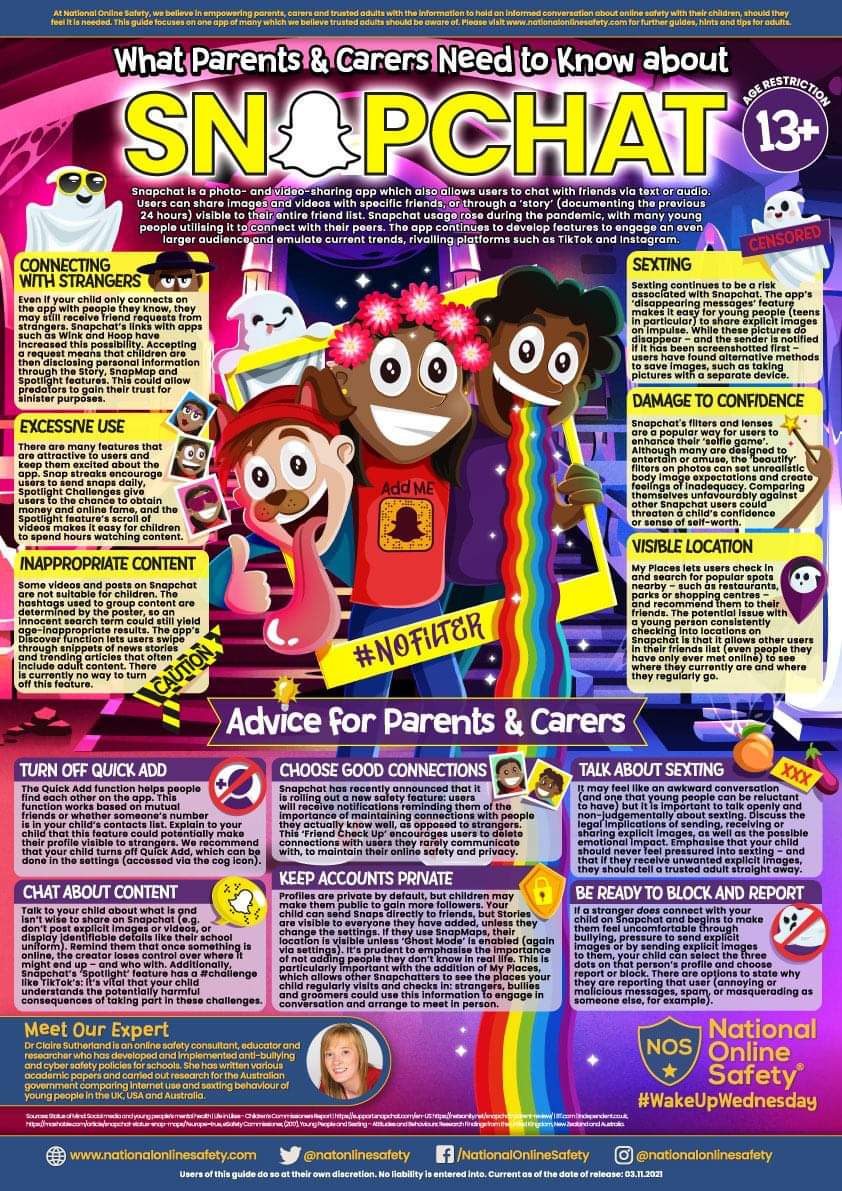
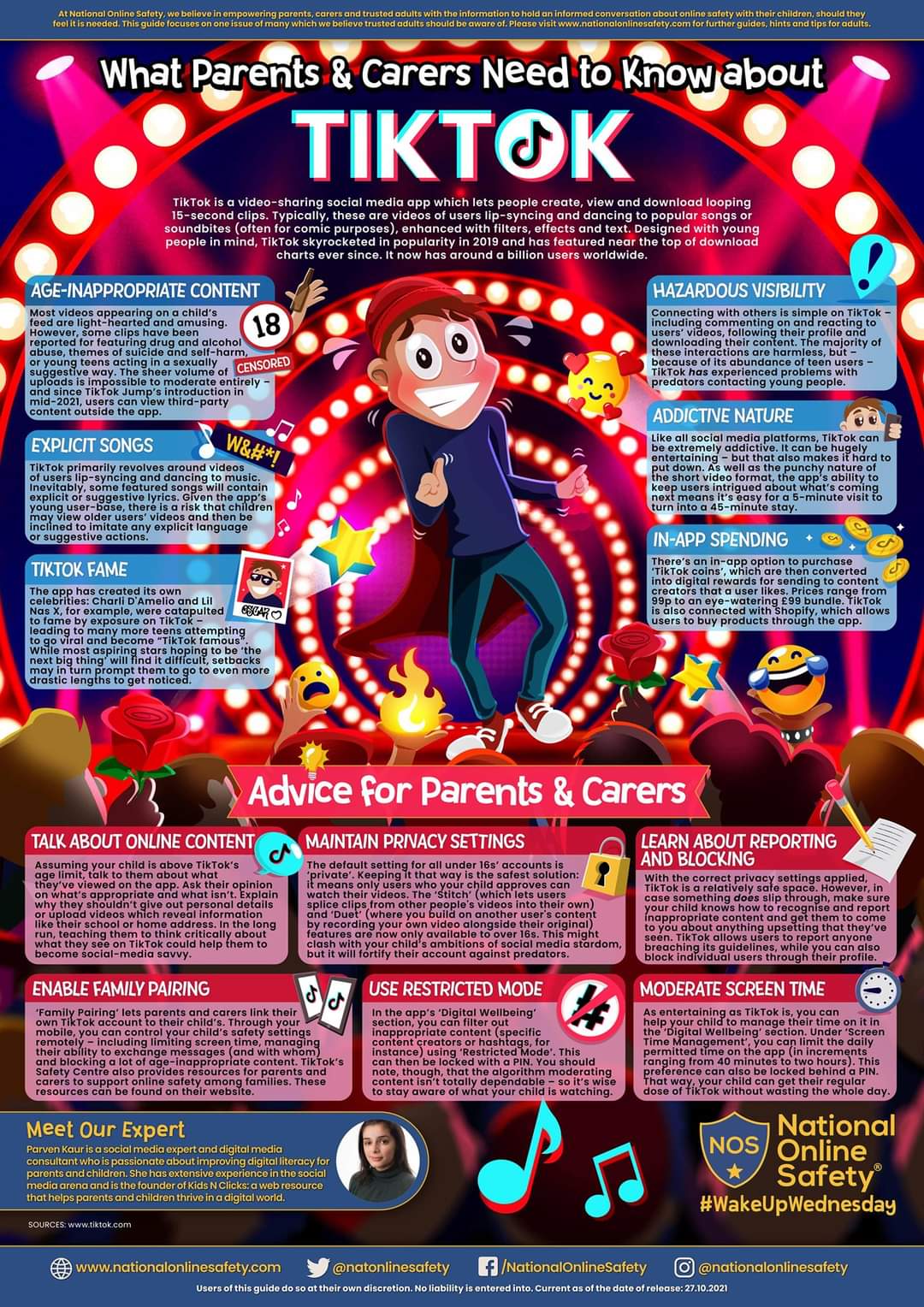
E-Safety Documents
Useful Websites
Curriculum
Intent
Our Computing curriculum is based on what we know is best for our pupils. We aim to prepare our children for a rapidly changing world through the use of technology. The Computing curriculum is designed to enable and develop computational thinking and creativity to further understand the world in which we live. The children are encouraged to persevere and reflect on their learning whilst creating, correcting, debugging and solving problems.
Through an engaging and varied computing curriculum, children will have gained key knowledge and skills in the three main areas of the Computing curriculum: computer science (programming and understanding how digital systems work); information technology (using computer systems to store, retrieve and send information) and digital literacy (evaluating digital content and using technology safely and respectfully). Through these three strands, we strive to develop children’s enthusiasm and a love for Computing, and understand how important Computing is in the wider world.
Teaching and Learning
The school’s Computing aims are to:
- Use Computing as a tool to engage pupils in an interactive and collaborative learning environment
- Respond to new developments in technology
- Equip pupils with the confidence and capability to apply Computing effectively throughout their life
- Develop the understanding of using ICT safely and responsibly
- Enhance other areas of the curriculum by enabling staff to have the confidence to use ICT effectively
- Provide a wide ranging, flexible and enjoyable curriculum
The Computing curriculum focuses on three key areas: computer science, digital literacy and information technology. We teach the three strands of the Computing curriculum through a mixture of skill specific sessions, as well as through cross-curricular thematic work, which gives children the opportunity to consolidate and extend the skills they have been taught in different situations and to support their learning in other curriculum areas.
This ensures that pupils can:
- Understand the principles of computer science including logic, algorithms, data representation and communication
- Analyse problems in computational terms
- Understand how computer systems work
- Write programs to achieve a given goal
- Use logic to solve coding problems (debugging)
- Be responsible, competent and confident users of technology
- Use their own initiative to apply technology in various scenarios to best effect
- Critically analyse data and information and display information appropriately
Early Years
At foundation stage it is important that children have a wide ranging, play-based experience to Computing in different contexts, including outdoor play, to achieve the Early Years Learning goals:
- Children recognise that a range of technology is used in places such as homes and schools.
- Children can select and use technology for particular purposes.
Children should learn that Computing is not just about using a computer. There are many ways of achieving this, such as:
- Using Bee Bots to develop basic understanding of algorithms
- Using recording devices to help develop communication skills
- Using Computing in role-play scenarios.
Key Stage 1
By the end of key stage 1, pupils should be able to:
- Understand what algorithms are and how a program executes a sequence of instructions
- Write and debug simple programs
- Use logical reasoning to predict the behaviour of simple programs
- Store, manipulate and retrieve data from a range of digital platforms
- Recognise uses of technology outside of school
- Use technology safely and respectfully, keeping personal information private and knowing where to go for help
Key Stage 2
By the end of key stage 2, pupils should be able to:
- Design, write and debug programs that accomplish specific goals
- Solve problems by decomposing them into smaller parts
- Use sequence, selection and repetition in programs as well as using variables and various forms of input and output
- Use logical reasoning to explain how algorithms work; detect and correct errors in algorithms
- Use search technologies effectively; appreciate how search results are selected and ranked
- Understand computer networks and how they can provide a range of services
- Use their own initiative and reasoning to apply technology in the most effective way in a safe and appropriate manner
Coverage and Progression
We have recently revised our curriculum to ensure we have good progression and coverage throughout the school. Long and medium term plans have been developed to ensure that variety, progression and consolidation of skills runs throughout the school. Class teachers use long and medium term planning to inform their short term planning and to ensure that all needs are catered for.
E-safety
E-safety and security guidelines are outlined in the e-safeguarding policies. Children are reminded of their responsibilities when accessing any school computer.
Inclusion and equal opportunities
We recognise that all children are different and progress at different rates. Some children with specific needs may not be working at the same level as their peers. Therefore, we carefully plan lessons in order to support children with these differing needs and ensure their learning is appropriate for their stage of development. We aim to challenge all our children. It is an integral part of our teaching strategy to support and encourage children to reach their full potential and to believe in their own abilities.
All pupils, regardless of race or gender, have the opportunity to develop their Computing capability. We promote equal opportunities for computer usage and fairness of distribution of Computing resources. Regular surveys are carried out to obtain an understanding of levels of access children have to Computing at home.
Where it is recognised that Computing would provide a significant improvement to the learning of a pupil with a particular need, a solution will be explored. Alongside this, staff will structure their teaching materials to match a learning difficulty.
Enrichment
To ensure that the children have a variety of learning experiences at Lincoln Gardens, numerous dinnertime Computing clubs take place focusing on all three strands of the Computing curriculum. This including more able children in key stage 2 being identified as digital leaders, providing opportunities for these children to work across year groups and take part in whole school assemblies. To further raise the profile of Computing, KS2 take part in the yearly Bebras Computing Challenge focusing on the children’s computational thinking where the children’s participation and results are celebrated as a whole school during assemblies. Similarly, selected children in KS2 have visited the 20-21 Visual Arts Centre in Scunthorpe to work with the artist Genetic Moo. The children worked in pairs to produce pieces of art using coding to create interactive artwork, which then went on display the following day to the public.
Assessment and Recording
In our school, assessment of children’s computing capability is achieved through:
- Evaluation of children’s achievements against learning objectives and success criteria (teachers’ formative assessment)
- Summative assessment of individual achievements against the programme of study (entered onto FFT termly)
- Work saved on the school servers and printed evidence in children’s books
- In the Foundation Stage, observations of children’s emerging Computing skills are captured and saved within the Tapestry online learning journal
- Progress is also reported to parents as part of the annual report
Resources and Access
As technology is critical to teaching and learning, the school has an on-site technician and Network Manager who maintain the school IT infrastructure. A managed wireless system is in place that caters for the school’s current needs as well as providing the opportunity for expansion as needs increase. This also ensures that there is full network coverage across the school site, internally and externally. All laptops and computers are protected by up to date security software and monitored using Senso to ensure the safety of all users on the network. The school’s network is fully managed through an active directory domain to allow efficient management of all devices. Pupils in Key Stage 2 have their own domain user account.
IT is a highly valued learning tool at Lincoln Gardens Primary School by both teachers and children. To enable a rich Computing experience, we have invested in the following resources allowing children to access Computing in a range of ways:
- Tablets (60 iPads)
- Dedicated classroom laptops for day to day use
- Computing Suite
- Additional laptops in the Computing Suite
- Interactive board in each classroom
- Interactive Floor Projector (foundation unit)
- Makey Makey equipment
- Cameras
- Bee Bots
- Image and video editing software suite
- Microsoft Volume licensing to keep all Microsoft software up to date
Monitoring and Review
The Computing leader monitors teaching and learning through:
- Classroom observation and discussion with pupils
- Scrutiny of children’s work stored on the school server and presented in books
- Monitoring and analysis of data
- Discussion with the on-site technician and Network Manager
- Discussion with the head teacher
- Development, implementation, evaluation and review of action plans
- Ensuring policy matches practice
- Reviewing available resources and proposing purchases of new hardware and software
- Assessing CPD needs and arrange appropriate training
- Informing staff of emerging technologies
- Attending appropriate courses to update knowledge of current developments,
- Engaging in learning walks with SLT
Design Technology
Downloads
Curriculum
Intent
Our Design Technology (DT) curriculum is based on what we know is best for our pupils. It prepares children to deal with tomorrow’s rapidly changing world and encourages them to become independent, creative problem-solvers and thinkers. It enables them to evaluate designs and identify needs and opportunities and to respond to them by developing a range of ideas and by making products and systems, which can affect daily life and the wider world.
We strive to offer children the chance to use creative thinking through a variety of practical activities. These activities will ensure pupils are taught the knowledge, understanding and skills needed to engage in the process of designing and making.
Through an engaging and varied DT curriculum pupils acquire a broad range of subject knowledge and draw on disciplines such as mathematics, science, engineering, computing and art. Pupils are encouraged to take risks, becoming resourceful, innovative, enterprising and capable citizens and to become astute and informed future consumers and potential innovators.
Teaching and Learning
At Lincoln Gardens Primary School we encompass a variety of teaching and learning styles in DT lessons to ensure skills and knowledge are embedded for all children, these include visual, auditory and practical styles of learning. Teachers ensure that the children apply their knowledge and understanding when developing ideas, planning and making products, and evaluating them. They provide the children with the opportunities to work on their own and to collaborate with others, listening to other children’s ideas and treating these with respect. Teachers provide children with a wide range of materials and resources including common tools, cookery equipment and computing software. We recognise that in every class there are children of differing abilities and we strive to provide suitable learning opportunities for all children by matching the challenge of the task to the ability of the child. We achieve this through a range of strategies:
- Setting tasks that are open-ended and can have a variety of results
- Grouping children by ability and setting different tasks for each group
- Grouping children by mixed ability to provide peer support and scaffolding
- Providing a range of challenges through the provision of different resources, task and/or questioning
- Using additional adults to support the work of individual children or small groups.
Planning
Our engaging curriculum is based on the National Curriculum and where possible we plan to the local community of our school, using the local environment as the starting point for aspects of our work. We also look into how children can work in a range of other relevant contexts, such as the home and school, gardens and playgrounds, the local community, industry and the wider environment. We carry out the planning in three phases long-term, medium-term and short-term. The long-term plan is based on the National Curriculum objectives for each stage to ensure coverage and progression so the children are increasingly challenged and they move through the school. The progression map for DT can be found on the shared drive. The medium-term plans identify the skills, knowledge and vocabulary, which will be taught each, term and show the distribution of work across a term. The short-term plans are completed for each lesson and show the skills, learning objectives, expected outcomes and they detail how the lessons are to be taught. Activities and projects in are planned to build on the prior learning of the children. We give all children the opportunity to develop their skills, knowledge and understanding.
EYFS
We encourage the development of DT skills and knowledge as set out in the Early Years Outcomes. We relate this development to the objectives set out in the Early Learning Goals. We offer early experiences including:
- asking questions about how things work,
- investigating and using a variety of construction kits,
- investigating and using materials, tools and products,
- developing assembling and joining skills, handling appropriate tools and construction materials safely and with increasing control.
These early experience lay the foundations for later work on the National Curriculum.
Lessons are planned according to the children’s interests and provide an enabling environment offering a range of experiences that encourage exploration, observation, problem solving, critical thinking and discussion.
Cross Curricular Links
English
DT contributes to the teaching of English in our school by providing valuable opportunities to reinforce what the children have been doing during their English lessons. Through discussion, the children develop an understanding that people have different views about design and learn to justify their own views and clarify ideas they have for their designs. The evaluation of products requires children to articulate their ideas and to compare their views with those of other people.
Maths
In DT, the children are given the opportunity to use and apply their mathematical skills. They learn how to measure accurately and how to check their results for reasonableness. They apply their knowledge of fractions and percentages to describe quantities and calculate proportions. They learn to read and interpret scales, collect and present data and draw conclusions. In designing and modelling, they learn about size and shape.
Science
Cross-curricular links can be made with science within certain aspects and teachers use these links to combine their teaching in areas such as, electricity and healthy foods.
Computing
Computing enhances the teaching of DT, wherever appropriate, in all key stages. The children use computing to research, collect information, and look at ways that they can design. In Key Stage 2, they have opportunities to use computer control.
Art
Children are encouraged to use their skills and methods developed in Art for applying aesthetic enhancements to their designs and products.
PSHE
We encourage a sense of responsibility in following safe procedures when making products and the projects teach them how to plan, set targets and meet deadlines. They also learn about personal hygiene, the prevention of disease spreading, health and healthy diets when working with food.
Spiritual, moral, social and cultural development
The children are given the opportunity to work together and discuss their ideas and feelings about their work and the work of others. Through collaborative and cooperative working, the children develop respect for the abilities of other children and a better understanding of themselves and their own skills. They also develop a respect for the environment, for their own health and safety, and for that of others. They develop a cultural awareness and learn to appreciate the value of differences and similarities.
Inclusion
DT is taught to all children, whatever their ability or need and we provide opportunities for all pupils to make good progress. We work to meet the needs of pupils with special educational needs, those with disabilities, those with special gifts and talents and those learning English as an additional language. Assessment against the National Curriculum allows us to consider each child’s attainment and progress against expected levels. This helps to ensure that our teaching is matched to the child’s needs, allowing them to make progress across the various areas of the subject over the years.
Assessment for Learning
Teachers assess children’s work in design and technology as they observe them during lessons. At the end of term teachers make a judgment based on the National Curriculum levels of attainment and record this on the assessment system FFT. Children are also encouraged to make judgements on how their work can be improved. Teachers then use the assessments to plan future work and to make an annual assessment of progress for each child as part of the annual report to parents. This information is passed on to the next teachers at the end of the year.
Resources
There are a range of resources to support the teaching of DT held across the school. Materials and equipment suitable for teaching all of the DT skills in KS1 and KS2 are kept in labelled and locked stores in the resource cupboard and the key is kept in the main office, a list of all the resources in school can be found in the DT folder on the shared drive. It is the responsibility of the class teacher to be aware of the resources needed for a particular unit and to ensure that they are available in consultation with the designated subject lead.
Health and Safety
It is the teacher’s responsibility to be aware of safety issues in all design and technology activities by:
- Providing a safe working area (furniture, materials storage, tool maintenance)
- Teaching and implementing safety rules and good practice, including hygiene
- Teaching safety rules and safety issues
- Ensuring the safe and correct usage of tools and materials
- Ensuring working areas are kept clean and tidy
- Considering storage of partially completed work
- Ensuring the correct disposal of waste
The teacher is responsible for ensuring that children are adequately supervised when using tools and that other adults working in the classroom understand safety rules and maintain safety standards.
Where children are to participate in activities outside the classroom e.g. on a visit to a museum or restaurant, a risk assessment is completed prior to the activity to ensure that the activity is safe and appropriate for the pupils.
Enrichment
Teachers are encouraged to incorporate elements of DT into WOW days, celebration days and parent into schools activities, as many children enjoy the practical side of the subject this can be a real hook to get them involved in a theme.
Monitoring and Reviewing
The co-ordination and long term planning are responsibility of the designated subject leader.
The subject leader also:
- Supports for colleagues by keeping them informed about current developments;
- Reviews and updates policies relating to DT;
- Reviews planning across the Key Stages to ensure coverage;
- Liaises with other subject leaders to ensure coordination of resources for any cross-curricular work;
- Keeps abreast of new developments and campaigns with a DT focus;
- Maintains a subject leader file which includes a gallery of the children’s work;
- Provides the Head Teacher with an annual summary report detailing strengths and weakness and creates an action plan for further development;
- Report to Governors;
- Use subject leader time to perform book scrutinies, pupil voice tasks, and drop in observations to ensure quality of teaching and progression of the subject.
The classroom teacher is responsible for the delivery of the policy and the curriculum and the care and security of the tools and materials in their classroom.
History
Downloads
Curriculum
Intent
Our History Curriculum is based on what we know is best for our pupils. We believe that History plays an essential part of our curriculum by instilling a love of learning and deepening our pupils understanding. Our History curriculum makes full use of resources, sources and visitors both in our surrounding area and further afield, to support the teaching of History to all of our pupils, irrespective of their different needs and abilities. We aim to expose children to substantive knowledge (substance knowledge e.g key dates, key people, features and events) and disciplinary knowledge (the sills used to interpret the past, e.g cause, effect, causation, and sources). We expose children to a variety of sources to allow them to discuss the validity and accuracy of these, allowing discussions and debates to take place; so all children have the freedom of speech to voice their opinions. This leads nicely into providing opportunities for our children to read and write at length about their current topic. We ensure children receive hands on learning opportunities where possible in their topics, as feedback from our children highlighted the importance of replicas, artefacts and school trips to their learning experience.
With our school being situated in a deprived area, we aim to provide children with a deeper understanding of their local area and link this to topics being taught where possible. These links allow children to get a deeper understanding of where they live and how things have changed over time and where they fit into society and the world around them.
We provide pupils with a chronological awareness of the past both in Britain and the wider world and discuss how these events have impacted and influenced our future. We aim to relate pupils learning to the National Curriculum objectives, but also allow them chance to be inquisitive about events both current and historic.
Our curriculum has been coherently planned to ensure the structure and progression builds on from pupil’s previous learning. We aim to stimulate pupil’s curiosity and fascination of the past and encourage them to ask questions, think critically, evaluate the reliability of sources and develop their own opinions informed by their finding. Through doing so, we are determined to ensure pupils deepen their knowledge and expose pupils to a variety of significant individuals and diverse societies. This will in turn, allow pupils to understand their own identity and how the past has influenced the future.
Coverage and progression
We have recently revised our curriculum to ensure we have good chronology throughout the school. This increase of our chronological understanding allows us as staff to ensure children have clear progression throughout their school lives and that past lessons impact and build on the children’s prior knowledge to supply them with a wealth of knowledge regarding a number of different periods within History but how they all link through cause and effect.
The aims of History in our school are:
- to encourage children to have an interest and enthusiasm about the past and to develop an understanding that enables them to enjoy all that History has to offer;
- to develop research skills and opportunities to convey understanding and interpretations of the past in a variety of ways;
- to improve children’s knowledge and understanding of significant events and people in British History, Europe and the world and to appreciate how things have changed over time due to these events/people;
- to develop a sense of chronology;
- to have some knowledge and understanding of historical development in the wider world;
- to help children understand why events took place, the causes and effects they had on people and the world around us;
- to help children understand society and their place within it, so that they develop a sense of identity of their cultural heritage;
- to develop in children the skills of enquiry, investigation, analysis, evaluation and presentation.
- to develop independent research skills through enquiry-based learning and provide situations for independent and group activities.
Teaching and learning style
The expectation of History teaching focuses on enabling children to think as historians. We place an emphasis on examining historical artefacts and primary sources to give children a real sense of importance and an inquisitive mind towards History. We give children the opportunity to visit sites of historical significance. We encourage visitors to come into the school and talk about their experiences of events in the past. We recognise and value the importance of stories in History teaching and we regard this as an important way of stimulating interest in the past. We understand that the teaching and learning styles will vary from lesson to lesson and will need to focus on the needs of the individual children and what they are interested in learning about. We aim to bring History alive for our children and mainly this is taught through theme based lessons linking with the National Curriculum. We believe lessons should be as practical as possible and focus on helping children understand that historical events can be interpreted in different ways and that they should always ask questions about information they are given, such as “how do we know? who did this effect? Can this happen today?”.
We recognise the fact that in all classes there are children of widely different abilities in History and we seek to provide suitable learning opportunities for all children by matching the challenge of the task to the ability of the child. We achieve this by:
- setting common tasks which are open-ended and can have a variety of responses;
- setting tasks of increasing difficulty. Not all children complete all tasks;
- setting different tasks for each ability but having a no ceiling approach so children are able to move on if they are able;
- providing resources of different complexity depending on the ability of the child;
- using classroom assistants to support children individually or in groups.
Enrichment within History
As part of the History curriculum we believe it is important for children to have the best learning experiences while they are with us. In order to give children these experiences we provide them with WOW days, this is a day off timetable and linked to their topic, we also encourage trips, visitors, use or replicas and artifacts as well as inviting our parents into school to share our learning and enjoy our topics with us.
History curriculum planning
The National Curriculum has changed slightly as there is now a need for children to develop more awareness of time in context and there is a greater emphasis on the chronology and understanding of Britain’s past. For an overview of the topics for each year group.
We use the Early Years Foundation Stage document in EYFS and the National Curriculum scheme of work for History from KS1 and KS2 as the basis for our curriculum planning in History, but we have adapted this by building on the successful units of work already in place with the use of progression maps. We ensure that there are opportunities for children of all abilities to develop their skills and knowledge in each unit and we build planned progression into the scheme of work so that the children are increasingly challenged as they move up through the school.
We carry out curriculum planning in History in three phases (long-term, medium-term and short-term). The long-term plan maps the History topics studied in each term during the key stage; the History subject leader works this out in conjunction with teaching colleagues in each year group. In Key Stage 1 we aim to give children an understanding of what History is and introduce them to some of the key terminology they will hear throughout their learning. At Key Stage 2 we place an increasing emphasis on independent historical study, cause and effect and chronology. We teach the knowledge, skills and understanding set out in the National Curriculum through the corresponding programme of study.
The class teacher writes the lesson plans for each History lesson (short-term plans). These plans list the specific learning objectives of each lesson. The class teacher keeps these individual plans, although s/he and the History subject leader often discuss them on an informal basis.
Teaching History to children with special educational needs (SEN), inclusion and differentiation to all
We teach History to all children, whatever their ability and make their learning appropriate for their stage of development. History forms part of the school’s curriculum policy to provide a broad and balanced education to all our children. We provide learning opportunities matched to the needs of children with learning difficulties and we take into account the needs of all our children in order to ensure they get the best out of their education, with the correct support. We aim to challenge our children and it this is an integral part of our teaching strategy within the school as we expect all children to reach their full potential and children are push and encouraged to believe in their own abilities. Differentiated tasks will aid the children in their learning; however a no ceiling approach is given to all lessons taught at LGPS and open ended activities and opportunities are given to all pupils both when working independently and as a group. We understand that our school curriculum planning must allow pupils to gain a progressively deeper understanding and competency as they move through our school and we aim to do this through creative, enquiry based learning to allow children to develop an enthusiasm and passion for History.
Assessment and recording
We assess children’s work in History by making informal judgements as we observe them during each History lesson. On completion of a piece of work, the teacher marks the work and comments as necessary. Notes may be written on the short -term plans. At the end of a unit of work, the teacher makes a summary judgement about the work of each pupil in relation to the expectations for that unit and the National Curriculum level of attainment; We use these grades (working towards, expected or greater depth) as a basis for assessing the progress of the child and we pass this information on to the next teacher at the end of the year. This information can be used to track children’s progress electronically using Otrack or the Rising Stars assessment grids to support our understanding.
The History subject leader keeps samples of children’s work in a portfolio. These demonstrate what the expected level of achievement is in History for each age group in the school.
Resources
There are sufficient resources for History teaching units in the school and where this is not possible the History subject leader will support in locateing resources or purchasing new were necessary. The library contains a supply of topic books and online software is available to support children’s individual research. We have access to a wide variety of interactive resources both on computers and Ipads to support children’s learning and inquisitive enquiry skills. Teacher’s do have a annual subscription to the Historical Association website, where there are resources and planning to support teaching in delivering fun and engaging History lessons.
Monitoring and review
Monitoring of the standards of children’s work and of the quality of teaching in History is the responsibility of the History subject leader, at Lincoln Gardens Primary School we will use Otrack statements and the subject progression maps to inform our planning and assess the children throughout the year. The work of the History subject leader also involves supporting colleagues in the teaching of History, being informed about current developments in the subject, and providing a strategic lead and direction for the subject in the school. The History subject leader gives the head teacher and governors an annual report in which she evaluates the strengths and weaknesses in the subject and indicates areas for further improvement. This forms the basis for the subject development plan. The History subject leader has specially allocated time in which to fulfil this role by reviewing samples of children’s work and visiting classes to observe teaching in the subject and through informal conversations with colleagues.
Geography
Downloads
Curriculum
Intent
Our Geography curriculum is based on what we know is best for our pupils. We believe that Geography should allow all pupils, regardless of their unique and differing needs the ability and skills to grow and succeed. We aspire for our pupils to develop a greater understanding and knowledge of the world around them and their place within not only their local area, but their place in the wider world.
Geography provides pupils with a knowledge and skills based curriculum that is progressive year on year, allowing pupils to transfer these skills to a variety of other curricular areas. We believe in allowing pupils to become resilient independent and investigative enquirers from an early age by instilling them with curiosity of our world and the people who inhabit it.
We aim to provide pupils with a confident understanding of the diversity of people, places, resources and the natural and human features of our environment. This allows pupils to propose and answer questions about the natural and human aspects of the world around them and preparing them for further education and adulthood.
Coverage and progression
We have recently revised our curriculum to ensure we have good progression of skills throughout the school. This increase of our Geographical skills allows us as staff to ensure children have clear progression throughout their school lives and that past lessons impact and build on the children prior knowledge to supply them with a wealth of knowledge regarding a number of different geographical places and an understanding of the world around them.
The aims of Geography are:
- To develop the geographical skills and vocabulary necessary to carry out effective geographical enquiry.
- To develop an interest and enjoyment of geographical experiences.
- To make sense of their own surroundings through learning about their own locality, and the interaction between people and environment.
- To extend interest and knowledge and understanding of places in Britain, Europe and the World.
- To increase their knowledge of other cultures and in doing so, teach a respect and understanding of what it means to be a positive citizen in a multi-cultural country.
- To allow children to learn geographical skills, including how to use, draw and interpret maps.
- To develop knowledge and understanding of the human and physical processes which shape places.
- To enable children to know and understand environmental problems at a local, regional and global level.
- To encourage in children a commitment to sustainable development and an appreciation of what ‘global citizenship’ means.
- To develop a variety of other skills, including those of enquiry, problem solving, ICT and investigation.
Teaching and Learning
We use a variety of teaching and learning styles in our Geography lessons. We believe in whole-class or small group teaching methods and we combine these with enquiry-based research activities. We encourage children to ask as well as answer geographical questions. We offer them the opportunity to use a variety of data, such as maps, statistics, graphs, pictures, and aerial photographs, and we enable them to use ICT in Geography lessons where this serves to enhance their learning. Digimaps has been purchased to help our fieldwork teaching, and to help us understand how areas have changed overtime. Children take part in role-play and discussions, and they present reports to the rest of the class. They engage in a wide variety of problem-solving activities. Wherever possible, we involve the children in ‘real’ geographical activities, e.g. research of a local environmental problem or use of the Internet to investigate a current issue.
We recognise the fact that there are children of widely different abilities in all classes and we provide suitable learning opportunities for all children by matching the challenge of the task to the ability of the child. We achieve this by providing differentiated learning activities and ‘steps to success’ that allow the children to develop their own learning.
Enrichment within Geography
As part of the Geography curriculum we believe it is important for children to have the best learning experiences while they are with us. In order to give children these experiences we provide them with WOW days, this is a day off timetable and linked to their topic, we also encourage trips, visitors, as well as inviting our parents into school to share our learning and enjoy our topics with us.
Geography curriculum planning
Foundation Stage
We teach Geography in the Foundation Stage as an integral part of the topic work covered during the year. We relate the geographical aspects of the children’s work to the objectives set out in the Early Learning Goals (ELGs), which underpin the curriculum planning for children aged three to five. Geography makes a significant contribution to the ELG objectives, particularly those linked to ‘understanding the world’. Two main Geographical focus areas for children in the Foundation Stage include, ‘people and communities’ and ‘the world’. Children celebrate lots of different festivals and this is linked to learning about different countries. They learn about their local area by going on local walks to the postbox etc. Children are assessed at the end of the year as ’emerging’ ‘expected’ or ‘exceeding’ the Early Learning Goals and this is reported to parents.
Key Stage 1 and 2
We are currently using the National Curriculum document in order to teach core Geography skills to our children. The subject leader has created a progression map for Geography for the whole school with reference to previous learning and keywords. Teaching staff use this document to create and adapt lessons to meet the objectives and the needs of our children We plan cross-curricular themes which allow the children to develop their Geographical skills and provide interesting and engaging opportunities for learning. Children of all abilities have the opportunity to develop their skills and knowledge and through planned progression, we offer them an increasing challenge as they move through the school.
Our long/medium-term plans are based on the progression maps, which gives details of the specific Geographical skills required in each year group, as well as more challenging skills for higher ability children. These plans are created using these skills, to ensure progressive coverage throughout the school. The skills requirements for each year group have been audited by the Geography leader to ensure a spread of skills throughout the year and to ensure that all skills have been covered in the appropriate termly topic.
Short term plans are written by class teachers for individual Geography lessons. These plans list specific learning objectives (Walt) and how these objectives are to be achieved through differentiated and extended learning opportunities (Steps to success).
Teaching History to children with special educational needs (SEN), inclusion and differentiation to all
At our school we teach Geography to all children, whatever their ability. Geography forms part of the school curriculum policy to provide a broad and balanced education to all children. Through our Geography teaching we provide learning opportunities that enable all pupils to make progress. We do this by setting suitable learning challenges and responding to each child’s different needs.
When progress falls significantly outside the expected range, a child may have Special Educational Needs. As teachers, we aim to ensure that our First Quality Teaching matches the needs of the child and enables all children to have access to an exciting and engaging curriculum regardless of their ability. We plan activities to ensure that all children have the opportunity to progress and develop their geographical skills accordingly.
We enable pupils to have access to the full range of activities involved in learning Geography. Where children are to participate in activities outside the classroom, for example, a field trip, we carry out a risk assessment prior to the activity, to ensure that the activity is safe and appropriate for all pupils.
Greater depth children will be given work appropriate to their level. They will be challenged and provided with extension activities where and when necessary.
Teachers in their planning must ensure that all pupils are able to participate as fully and effectively as possible.
We have a clear view that every child should be exposed to a full range of activities and experiences irrespective of gender, race, or ability.
To ensure that pupils of all abilities make worthwhile progress in Geography:
- Teachers provide suitable ways for pupils with different abilities to access difficult ideas.
- Teachers should challenge more able children by expecting them to work with greater independence and by raising expectations about how they might communicate their ideas.
- Teachers may also give more able children a problem to solve independently or ask them to carry out enquiry based research on a geographical issue.
Resources
There are sufficient resources for teaching Geography in the school. Some general resources are held in a central store, some are kept with the lead, more specific resources are kept by individual teachers as appropriate to the topics they teach. The resources are audited and staff are asked if they require any new resources to carry out the teaching of Geography. In the library we have a good supply of Geography topic books and new atlases and maps have been purchased to support our teaching of Geography and the skills required. There is a range of educational software to support the children’s individual research in classes and children have access to laptops, tablets and digital cameras.
Assessment, recording and reporting
We assess children’s work in Geography by making informal judgements as we observe them during each Geography lesson. On completion of work, the teacher marks it and comments as necessary. Feedback is consistent with the school’s Marking and Feedback Policy. Assessments are made against the short term planning; these are used to refine planning so that activities are well differentiated. At the end of the summer term, pupils are assessed as working towards, expected or greater depth against the skills requirements for their year group and this is reported to parents on the annual report. All data is held on the central assessment system of Otrack.
Monitoring and Review
Monitoring the standards of children’s work and the quality of teaching in Geography is the responsibility of the class teacher and Geography subject leader. The work of the subject leader also involves providing a lead and direction for the subject within the school. The subject leader evaluates the strengths and weaknesses in the subject and indicates areas for further development. The subject leader reviews samples of children’s work and monitors planning.
Music
Downloads
Curriculum
Intent
We strive to provide high quality Music provision that inspires all pupils to realise and achieve their musical potential.
When listening and appraising, our pupils engage with, and are inspired by, a rich catalogue of high quality, historically and culturally diverse, live and recorded music. These experiences foster a love of music in our children, whilst encouraging and nurturing their individual musical tastes and improving their aural memory.
We recognise and celebrate the transformative power of singing, and seek to enable our learners to find and use their singing voices with expression and creativity from an early age. As pupils grow and develop, we nurture their love of singing, whilst increasing vocal accuracy, fluency and control.
We believe that all children should have access to and experience of playing a wide range of musical instruments, with the option to extend their learning into small group and/or whole class tuition with a Music specialist in Key Stage 2.
The opportunity for pupils to discover and develop their talent as musicians is vital to our curriculum, and plays an important role in increasing their self-confidence, creativity and sense of achievement.
National Curriculum Aims
Key Stage 1
- Pupils will be taught to:
use their voices expressively and creatively by singing songs and speaking chants and rhymes. - play tuned and untuned instruments musically.
- listen with concentration and understanding to a range of high-quality live and recorded music.
- experiment with, create, select and combine sounds using the inter-related dimensions of music.
Key Stage 2
- Pupils will be taught to
play and perform in solo and ensemble contexts, using their voices and playing musical instruments with increasing accuracy, fluency, control and expression. - improvise and compose music for a range of purposes using the inter-related dimensions of music.
- listen with attention to detail and recall sounds with increasing aural memory.
- use and understand staff and other musical notations.
- appreciate and understand a wide range of high-quality live and recorded music drawn from different traditions and from great composers and musicians.
- develop an understanding of the history of music.
Useful Websites
https://charanga.com/yumu/login Access your current Charanga music lessons at home so that you can revisit favourites songs and join in with the singing whilst this is still restricted in school. Usernames and passwords were sent home in a letter during Summer 2021. Please ask your class teacher if you need a replacement letter.
https://www.bbc.co.uk/teach/ks1-music/zbcjscw BBC Teach KS1 Music
https://www.bbc.co.uk/teach/bring-the-noise BBC Teach Bring the Noise
https://www.bbc.co.uk/bitesize/subjects/zwxhfg8 BBC Bitesize KS2 Music
https://www.nyphilkids.org New York Philharmonic KIDZONE featuring some amazing interactive games!
https://www.singup.org/singupathome Our favourite Sing Up songs, free to use at home during the pandemic.
https://www.outoftheark.co.uk/ootam-at-home/thank-you/ Free singing resources with lyrics videos for Out of the Ark.
https://www.classicsforkids.com Fun and accessible resources to teach children about classical music and the great composers.
Art
Downloads
Curriculum
Intent
At Lincoln Gardens Primary School, we believe that art is a vital and integral part of children’s education, providing them with the knowledge and skills to develop and express their individual creativity. Therefore, we provide a high quality art curriculum, which engages, inspires and challenges all pupils. This enables children to develop a natural sense of wonder and curiosity about the world around them. As pupils progress, they should be able to think critically and develop a more rigorous understanding of the different elements of art, including developing their proficiency in drawing, painting, printing and sculpture. Within our art curriculum, we explore various famous artists from different historic periods, examining how they reflect and shape our history, and contribute to the culture, creativity and wealth of our nation.
Curriculum
EYFS
The statutory framework outlines the following in the expressive arts and design section.
Exploring and using media and materials: children sing songs, make music and dance, and experiment with ways of changing them. They safely use and explore a variety of materials, tools and techniques, experimenting with colour, design, texture, form and function.
Being imaginative: children use what they have learnt about media and materials in original ways, thinking about uses and purposes. They represent their own ideas, thoughts and feelings through design and technology, art, music, dance, role-play and stories.
The National Curriculum outlines the following aims for Key Stages 1 and 2.
Key Stage 1
Pupils should be taught:
- to use a range of materials creatively to design and make
products - to use drawing, painting and sculpture to develop and share
their ideas, experiences and imagination - to develop a wide range of art and design techniques in using
colour, pattern, texture, line, shape, form and space - about the work of a range of artists, craft makers and
designers, describing the differences and similarities between different
practices and disciplines, and making links to their own work.
Key Stage 2
Pupils should be taught to develop their techniques, including
their control and their use of materials, with creativity, experimentation and
an increasing awareness of different kinds of art, craft and design.
Pupils should be taught:
- to create sketch books to record their observations and use
them to review and revisit ideas - to improve their mastery of art and design techniques,
including drawing, painting and sculpture with a range of materials for example, pencil, charcoal, paint, clay - about great artists, architects and designers in history.
Coverage and Progression
In order to meet the aims of both the EYFS framework and the National Curriculum, the art subject leader will provide class teachers with an Art Whole School Curriculum Map (See appendix 1) and Art Knowledge Mats (see appendix 2). These will outline the progression of key skills including drawing, painting, printing, collage and sculpture for each year group and include key vocabulary for each year group. They will also identify artists related to each skill/area. Teachers can choose to link these key skills to their current curriculum topic or choose to teach the skill as a stand-alone lesson.
The sequencing of art lessons should follow these series of steps:
- Look at artwork of a relevant artist and evaluate within sketchbooks (artists will be varied in gender, date and culture to ensure children are exposed to a variety of artists).
- Introduce a specific skill as the focus of the lesson. Demonstrate how to complete via teacher modelling / video tutorials etc. Allow children time to experiment and practice this skill within their sketchbooks (Y1-6). Encourage children to be creative and swap between mediums. Children in years 1-6 should be annotating these trials throughout their sketchbooks, formulating their own opinion of their work.
- Create a final piece of artwork. If not completed in sketchbooks, ensure photos are taken to stick in to show final work. Children should be able to show the skill they were taught independently whilst also using prior knowledge of other skills. They should be independent when choosing materials and equipment to show their understanding.
- Evaluate their final piece of artwork, ensuring they are evaluating at the suitable
level for their year group expectations.
Inclusion and equal opportunities
Art plays an important part in the life of our school where children are able to enjoy and achieve. Opportunities are available to every child and all children take part in creative activities; making a positive contribution to the life of the school and local community. Activities both within and outside the classroom are planned in a way that encourages full and active participation by all children, matched to their knowledge, understanding and previous experience. Children have equal opportunities to develop their understanding and enjoyment of art regardless of race, gender and ability. Every effort will be made to ensure that activities are equally interesting to both boys and girls. Art from all cultures is valued and teachers ensure that all pupils have access to a diverse range of resources. Teachers ensure that the curriculum is appropriate for the needs of the children.
Enrichment
At Lincoln Gardens we are proud of our artwork and want to share the successes of the children whenever possible. Every term, the pupils at Lincoln Gardens will complete a WOW event and we will share this with parents/carers through art exhibitions, work shared on our website and work in local art galleries. We are also proud to offer extra enrichment activities such as our weekly art club during lunch times.
Assessment and Recording
All children will be provided with a sketchbook, which stays with the child throughout their school journey. This will enable teachers to see progression in the pupils’ skills. Class teachers should assess the child’s work on a continual basis, following the assessment document in the back of pupils sketchbooks. Teachers can obtain this evidence by direct observation of children at work, questioning pupils or listening to their conversations, and by photographing and recording their finished products. This assessment process should provide enough information to inform the next teacher of progress made, and to be of use in preparing the annual report to parents.
Monitoring and Review
To maintain high standards in art across the school, the art subject leader will monitor and evaluate the effectiveness of Art teaching and learning by observing lessons, conducting sketchbook scrutinies and completing pupil voice and annual staff questionnaires. The subject leader will attend a governors meeting annually to update them on the progress of the subject to allow governors the opportunity to challenge as necessary. The subject leader will also attend an annual meeting with the head teacher and the deputy head teacher to discuss yearly progress of the subject.
To support staff in their delivery of art lessons, the subject leader will organise staff art CPD and offer guidance to staff. The subject leader will lead an annual subject staff meeting.
An annual review and update of the art policy, the whole school curriculum map and the art knowledge mats will be undertaken by the art subject leader.
British Values
Downloads
Curriculum
Intent
At Lincoln Gardens Primary School, we believe that British values is an essential part of a child’s time at school providing them with the knowledge to develop their individual liberty and know their rights as a member of the community both in a school context and the wider community, therefore it is essential that we provide all children with experiences to develop their democracy and individual liberty to help them in later life. The Department for Education states that there is a need “to create and enforce a clear and rigorous expectation on all schools to promote the fundamental British values of democracy, the rule of law, individual liberty and mutual respect and tolerance of those with different faiths and beliefs.” – 2011.
At Lincoln gardens these values are embedded daily in the following ways.
Democracy
Democracy is embedded in Lincoln Gardens. Children are given opportunities to make choices about their school life and can take part in democratic practices like voting for school councillors. Pupils are listened to by adults and are taught to respect the rights of every individual, both adult and child.
The Rule of Law
The importance of rules and laws are enforced on a daily basis. Children are taught to respect the school rules and follow the Lincoln Gardens Behaviour plan and are also taught the importance of this. Children are led to distinguish between right and wrong and are helped to manage behaviour. Children are involved in both praises and consequences such as class dojos.
Individual Liberty
Within Lincoln Gardens all pupils are encouraged to become independent learners by following the behaviour monsters that children strive to achieve gold in. Children are supported to make choices in a safe and supportive environment, whilst understanding their rights. Children are taught to respect others individual liberty and understand that others have the same rights as them. We encourage a non-bullying environment where children feel safe to express their individual liberty.
Mutual Respect
At Lincoln Gardens respect is an essential part of school, children to have respect for both adults and each other. This is embedded and modelled by adults in school showing mutual respect to both child and adult the pupils understand that it is expected that respect it shown to everyone, no matter on differences big or small. Children have chances to work in the wider community and continue to develop their mutual respect in the community as well as in school.
Tolerance
The importance of respect means that children are tolerant of those with different faiths and beliefs. Children are able to learn about different faiths and beliefs in their religious education, they are able to learn about the importance of tolerance of those with different faiths throughout history whilst learning about important key figures that fought for their voice to be heard. At Lincoln gardens we take part in global awareness lessons and welcoming visitors from different cultures whilst enjoying learning about the different faiths and encouraged to believe in what they choose.
Assemblies
British Values assemblies are led fortnightly by the British Values lead and these cover all of the British values as well as linking these into school practice. Children are taught about key people that worked hard so that we can have British values today. Children are actively encouraged to speak their minds and use their individual liberty whilst also supporting others individual liberty. Children are involved with competitions which raise awareness of British Values.
British ambassadors
At Lincoln gardens we have our British values ambassadors which involved a democratic vote to choose a leader for each value. From the vote we now have 4 British Values Ambassadors which will actively take part in British Values assemblies and will receive training to give help and support to other children around the school.
British Values in Key Stages 1 and 2
Key stage 1
Children are introduced to British values in lots of ways like using democracy in choosing. For example, encouraging the children to vote for which book they would want to read and voting for what games to play. Children are also introduced to individual liberty throughout PSCHE using the Jigsaw curriculum to develop and understanding of their rights. Children are constantly developing their mutual respect through interactions with adults and children. Children are introduced to the school behaviour system from the start of school, so they develop an awareness of right and wrong allowing children to later learn about the rule of law.
Key stage 2
Children continue to develop their understanding of British values in the second key stage. They continue learning in many of the same ways however they move onto learning more about tolerance of other faiths and begin to look deeper into the different faiths. Children grow a deeper understanding of the rule of law and continue to use the behaviour system. At Lincoln Gardens we are involved within the community allowing children to show mutual respect within the wider community.
PSHE
Downloads
Curriculum
Our PSHE curriculum is based on what we know is best for our pupils. We strive to ensure that all pupils are equipped with the skills and knowledge they need to become responsible, healthy and independent members of society. Our PSHE curriculum aims to teach children from Nursery to Year 6 how to understand their own feelings and respect the feelings and views of others. We want our pupils to develop positive and respectful relationships as they progress through school and eventually into adulthood. Through a variety of activities and on-going discussion, we want pupils to develop resilience and learn coping strategies which will support their physical and mental wellbeing. It is the intent of our PSHE curriculum that all pupils will be able to develop their understanding of the social and moral issues which are relevant to them and today’s society. Through the Jigsaw scheme of learning we strive to create a safe and respectful environment for children to explore their understanding of different issues. We are committed to developing our teaching of PSHE in order to support the ‘Spiritual, Moral, Social and Cultural’ development of our pupils because we want to prepare them as much as possible for their journey into the wider world and to become responsible citizens.
Local and National Guidance
The Education Reform Act of 1988 requires all schools to provide a broad and balanced curriculum that:
- Promotes the spiritual, moral, social and cultural development of young people at the school and of society
- Prepares young people for the opportunities, responsibilities and experiences of adult life
‘Every Child Matters’ requires the following outcomes for our young people:
- be healthy
- stay safe
- enjoy and achieve
- make a positive contribution
- achieve economic wellbeing
Schools have a statutory duty to promote young people’s wellbeing.
As our school is a place of learning and our intention is to create independent young people, it is essential that we provide the learning to enable our students to take increasing responsibility for these outcomes.
The national curriculum has three aims for all children, to become:
- Successful learners
- Confident individuals
- Responsible citizens
The provision of a comprehensive, developmental PSHE education programme, supported by a curriculum that provides opportunities for personal and social development, set within a ‘healthy school’ that models supportive behaviours and offers opportunities for young people to practise personal and social skills and make real decisions about their lifestyle, is central to our school’s response to these requirements.
Coverage and Progression
Our PSHE education programme recognises that young people will bring prior learning and real life experiences to their learning. Our programme respects and builds on these, providing a programme that reflects both the universal and unique needs of our students. We liaise with local professional agencies to enable us to prioritise learning within our programme and to ensure it is relevant.
We provide PSHE education through the ‘Jigsaw’ scheme of learning. This is a spiral programme that gradually expands and enriches key concepts, increases knowledge, deepens understanding, and rehearses and develops key skills through a thematic approach. Students in all years have discrete lesson time for PSHE.
Where appropriate, the subject is linked to other subjects in a cross curricular way such as:
- PE (healthy lifestyles)
- Science (some aspects of drug, SRE and moral awareness)
- DT food (healthy lifestyles)
- Drama (often address issues related to PSHE such as peer on peer abuse)
- English
- RE (diversity, relationships, moral, social and cultural issues e.g. PREVENT)
School assemblies refer to PSHE issues where appropriate and at the start of each term we have a whole school ‘Jigsaw’ assembly to introduce the new theme.
The ‘Jigsaw’ units taught across the year are:
- Autumn 1 – Being Me in My World
- Autumn 2 – Celebrating Difference (including anti-bullying)
- Spring 1 – Dreams and Goals
- Spring 2 – Healthy Me
- Summer 1 – Relationships
- Summer 2 – Changing Me (including sex education)
The aims of PSHE
The provision of a comprehensive PSHE education programme is central to achieving our school’s own aims and objectives and mission statement. PSHE education provides learning that makes an essential contribution to:
- reducing or removing barriers to learning – by providing learning that promotes positive relationships and thus supports young people in reaching their full potential
- developing the key concepts, knowledge and understanding, language, skills and strategies that enable young people to make positive lifestyle choices, now and in their future
- developing the key concepts and skills that both support academic learning (for example, team working that encourages more effective group enquiry) and transcend it (for example, building resilience and developing entrepreneurial skills), and that are essential to employability in a rapidly changing global economy.
The values and ethos of the school will not only be made explicit in PSHE education, they will at times be shaped by what happens in PSHE education. It is the planned provision through which we promote both the present and future personal and economic wellbeing of our young people. We like to think that PSHE lessons provide “learning for life” opportunities.
Teaching and Learning
The PSHE education programme is taught within a safe and supportive learning environment, where young people can develop the confidence to ask questions, challenge the information they are offered, contribute their own experience, views and opinions, and put what they have learned into practice in their own lives.
To facilitate pupils’ learning in PSHE:
- Attention is given to developing a safe and secure classroom climate (via use of ground rules in all years, with confidentiality boundaries clearly stated. The ‘Jigsaw Charter’ is a starting point for this).
- The purpose of each lesson is made clear
- Clear success criteria are used
- Appropriate learning experiences are planned and meet the needs of all the pupils in the class-they are planned to be age appropriate and to respond to local needs
- Learning experiences draw on pupils’ own experiences or existing knowledge, and provide a range of opportunities for pupils to learn, practise and demonstrate skills, attitudes and knowledge and understanding
- Time is given for pupils to reflect, consolidate and apply their learning
- Pupils are encouraged to take responsibility for their own learning and to record / reflect on their own progress
- A wide range of active teaching and learning methods are used to include many team games / role plays / card games / activities in the third person
- Information provided is realistic and relevant and reinforces positive social norms. It takes a positive approach that does not attempt to induce shock or guilt and focuses on what young people can do to be healthy, stay safe, enjoy and achieve, make a positive contribution and achieve economic wellbeing
- It is always stressed however, that most importantly what they learn within the classroom, needs to be applied out of school when students are ready / need to apply their learning
The PSHE education programme is just one part of what we do to help young people develop the knowledge, skills, attitudes and understanding they need to fulfil their potential. The learning provided by the PSHE education programme supports and is supported by other curriculum areas, cross-curricular learning opportunities, the school’s commitment to providing a ‘Healthy Schools’ climate and culture, and the pastoral system.
We are committed to providing a setting where the responsible choice becomes the easy choice. The personal and social development of young people is the responsibility of all staff, in partnership with families and the wider community.
Enrichment within PSHE
We have assemblies and celebrations throughout the year which bring the whole school together to explore different aspects of PSHE. Alongside our half-termly Jigsaw assemblies, we also engage pupils in; ‘Internet Safety Week, Anti-Bullying Week, International Kindness Day, Walk to School Week together with fundraising events for Children in Need, Sport Relief and MacMillan Support. Our weekly themed assemblies often include learning about inspirational role models and how they overcame adversity through applying positive personal attributes to difficult situations. Our ‘Out of this World’ assemblies celebrate behaviours for learning and encourage children to see the value in being resilient, motivated and determined. School trips including PGL also contribute towards elements of PSHE development.
PSHE Curriculum Planning
During the EYFS pupils gain confidence in trying new activities, saying why they like some activities more than others. They grow in confidence to speak in a familiar group and can identify a safe person to talk to in school if they are worried or upset. They will talk about their ideas, and will choose the resources they need for their chosen activities. They develop independent skills, say when they do or don’t need help and start to understand how to lead a healthy lifestyle regarding food. They notice and can talk about the effect that exercise has on their body.
Pupils explore and talk about how they and others show feelings, talk about their own and others’ behaviour, and its consequences, and know that some behaviour is unacceptable. They develop skills to work as part of a group or class, and understand and follow the rules. They adjust their behaviour to different situations, and take changes of routine in their stride.
Pupils spend time playing co-operatively, taking turns with others. They begin to learn to take account of one another’s ideas about how to organise their activity. They start to show sensitivity to others’ needs and feelings, and start to form positive relationships with adults and other children.
During key stage 1 pupils learn about themselves as developing individuals and as members of their communities, building on their own experiences and on the early learning goals for personal, social and emotional development. They learn the basic rules and skills for keeping themselves healthy and safe and for behaving well. They have opportunities to show they can take some responsibility for themselves and their environment. They begin to learn about their own and other people’s feelings and become aware of the views, needs and rights of other children and older people. As members of a class and school community, they learn social skills such as how to share, take turns, play, help others, resolve simple arguments and resist bullying. They begin to take an active part in the life of their school and its neighbourhood.
During key stage 2 pupils learn about themselves as growing and changing individuals with their own experiences and ideas, and as members of their communities. They become more mature, independent and self-confident. They learn about the wider world and the interdependence of communities within it. They develop their sense of social justice and moral responsibility and begin to understand that their own choices and behaviour can affect local, national or global issues and political and social institutions. They learn how to take part more fully in school and community activities. As they begin to develop into young adults, they face the changes of puberty and transfer to secondary school with support and encouragement from their school. They learn how to make more confident and informed choices about their health and environment; to take more responsibility, individually and as a group, for their own learning; and to resist bullying.
Pupils with special educational needs (SEN), inclusion and differentiation to all
PSHE education must be accessible for all pupils. High quality teaching that is differentiated and personalised will be the starting point to ensure accessibility. Teaching will link with particular targets pupils are working towards as set out in Educational and Health Care (EHC) planning and will also be mindful of preparing for adulthood outcomes (PfA outcomes).
Jigsaw is written as a universal core curriculum provision for all children. Inclusivity is a key part of its philosophy. Teachers understand the need for differentiation and tailor each lesson to meet the needs of the children in their class. To support this differentiation many Jigsaw lessons suggest creative learning activities allowing children to choose the media they work with and give them scope to work to their full potential. Jigsaw provides a wide range of additional support materials and guidance to ensure the needs of all children are met. These principles also apply to other linked subjects to ensure that all pupils can access an engaging curriculum and make good levels of progress.
Equal Opportunities
PSHE promotes the needs and interests of all pupils irrespective of gender / sexual orientation, culture, ability or aptitude. Good quality work to the best of their ability is the target for everyone. We promote social learning and expect our pupils to show a high regard for the needs of others. PSHE is a good vehicle for addressing both diversity and gender issues and ensuring equal opportunities for all.
Confidentiality, Safeguarding and Dealing with Sensitive Questions
All staff members have up-to date training with regard to Safeguarding and online safety. If a pupil asks a particularly sensitive question, staff will deal with this outside of the lesson but an agreed holding statement will be used. For example, ‘that is a really interesting question and I need time to think because I want to give you a really good answer.’ This then allows staff to follow a number of options. These include:
- Further questioning of the pupil with another member of staff present asking them for interpretation of the question they asked.
- Time to consult with colleagues to construct an appropriate answer or
- Liaise with pupil’s family, and obtain information about where to get further help or
- If the matter is considered a potential Safeguarding issue, the staff member responsible for this will be notified.
Teachers are aware that sometimes disclosures may be made during these sessions, in which case Safeguarding procedures will be followed immediately. Sometimes it is clear that certain children may need time to talk one-to-one after a Jigsaw session. We recognise the importance of allowing the time and appropriate staff for this to happen.
Working with external agencies
Working with external contributors can enhance teaching and provide additional skills and knowledge. This is prepared for carefully in advance to ensure planning and delivery of sessions is age appropriate and to discuss any materials which may be used. A teacher will always be present during these sessions. ‘The Partners in School’ form can be used when planning and evaluating the input of an external contributor.
We have a very effective partnership with ‘Big Talk’ who visit once a year to support our pupils’ developing awareness of their own bodies and how to keep themselves safe. ‘Big Talk Education’ is a leading UK sex education social enterprise working with schools across the UK.The ‘Big Talk’ facilitators work with parents and teaching staff to ensure that children receive high quality sex education which is taught in an age appropriate way to help keep them safe, healthy and happy.
https://www.bigtalkeducation.co.uk/bigtalk-education/
Resources
Our main teaching resource is ‘Jigsaw’ which provides a range of resources including lesson plans, photographs, power point slides, music and songs and on-going online support through ‘the Jigsaw Community’ section on their website.
Assessment, recording and reporting
Each lesson contains a formative assessment activity for teachers to assess children’s current level of understanding. At the end of each unit, teachers will use summative assessment to determine whether children are ‘working towards/working at/working beyond’. This will be based on the formative assessment activities, written work in journals and the assessment activities in the final lesson of each unit.
Religion and World Views
Downloads
Curriculum
Intent
Our Religion and World Views Curriculum will enable pupils to gain the knowledge and skills they need to be confidently religiously literate, which will better enable them to Participate in a diverse, global society. The Religious and World Views Curriculum provides opportunities for pupils to reflect on their own beliefs, values, ways of thinking and ways of linking ideas which will help them Grow and flourish as human beings. The knowledge and skills the curriculum will aspire pupils to embrace academic Success as well as with their life long Learning journey.
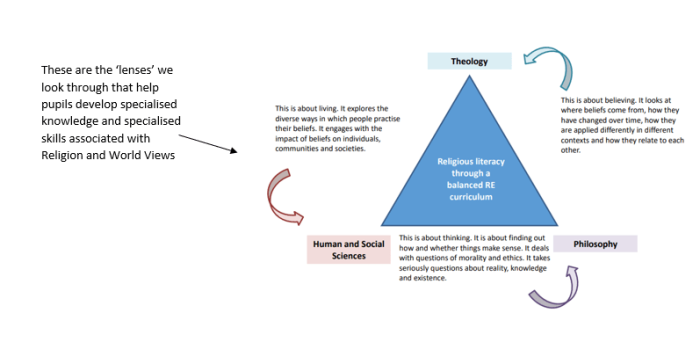
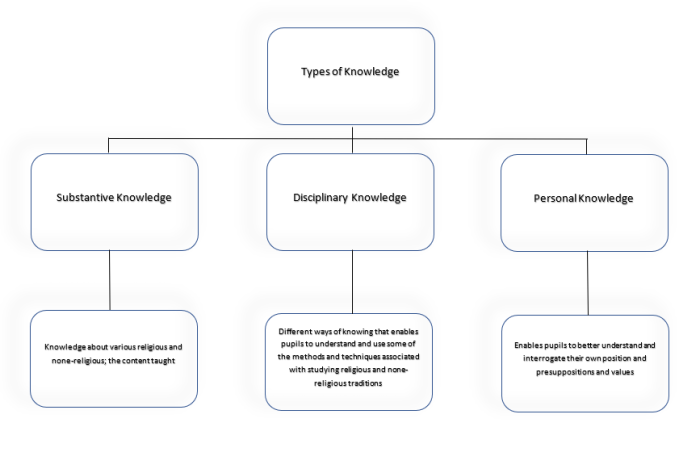
Coverage and progression
The devised progression maps allow staff to ensure the children have made clear progression throughout the school and build on previous knowledge and skills from previous learning.
Religions – Exposure to develop a more rigorous understanding of the numerous religious traditions, beliefs and practices that are followed in our multi-cultural society.
Year 1: Religion Coverage – Christianity and Islam
Year 2: Religion Coverage – Christianity and Islam
Year 3: Religion Coverage – Christianity, Judaism and Islam
Year 4: Religion Coverage – Christianity, Hinduism and Judaism
Year 5: Religion Coverage – Christianity, Hinduism and Islam
Year 6: Religion Coverage – Christianity, Islam, Judaism and Hinduism
Sticky knowledge is integral to the teaching of RE as it is vital to build upon the vocabulary and knowledge of the religions,. This embeds previously taught knowledge which allows the pupils to provide evidence of progression throughout the school, using well justified answers and informed opinions..
The aims of RE are:
- Develop an awareness of spiritual and moral issues in life experiences.
- Develop knowledge and understanding of Christianity and other major religions.
- Develop an understanding of what it means to be committed to a religious tradition.
- Be able to reflect on their own experiences and to develop a personal response to the fundamental questions in life.
- Develop an understanding of religious traditions and to appreciate the cultural differences in the world around us.
- Develop investigative and research skills and to enable the children to make reasoned judgements about religious issues.
- Respect other peoples’ views and to celebrate diversity.
Teaching and Learning
We use a variety of teaching and learning styles in our RE lessons. We believe in whole-class or small group teaching methods and combine these with enquiry based learning that engages the pupils to ask questions and create discussion about religions which will deepen and extend understanding. The children are expected to evaluate and give well-founded reasons by justifying their conclusions or views to enquiry.
In RE lessons we use a balance of first-hand experience, access to examples of living religious practice to research RE topics and high quality resources (some web based) to stimulate learning.
We recognise RE is highly effective when opportunities for reflection and creativity are integrated within lessons for pupils’ engagement enabling them to deepen understanding and present their findings.
We recognise that there are children with a wide range of abilities in all classes and provide suitable learning opportunities for all children by differentiating the tasks and giving each pupil time to reflect on their learning which gives different outcomes.
Enrichment within RE
As part of the RE curriculum we believe it is important for children to have the best learning experiences while they are with us. In order to give children these experiences we provide the opportunities for trips to places of worship, visitors into school. Also a school we enter the yearly Spiritual Arts competition that is run by SACRE.
RE Curriculum Planning
EYFS
The foundation stage deliver the RE content through the ‘understanding of the world’ strand of the EYFS curriculum. I am special, special people, special times, special places, special books and special objects.
Key Stage 1 & 2
The Local Authority agreed syllabus, (The Lincolnshire Agreed Syllabus) is used in order to teach RE. A whole school progression map for RE builds on and extends previous learning and key subject related vocabulary. Teaching staff use the progression map to create engaging learning opportunities and adapt lessons to meet the learning objectives and needs of our children. Children of all abilities have the opportunity to develop their skills and knowledge through planned progression we offer them an increasing challenge as they move through school.
The long term and medium plans are based on the progression maps which gives details of the key objectives and skills that are required in each year group. These plans are created around the RE aims to ensure progressive coverage throughout the school. The Learning objectives for each Year group have been audited by the RE subject leader to ensure that all topics and skills have been covered.
Short term plans are written by class teachers for individual RE lessons. These plans list specific learning objectives and layered outcomes and how these objectives are to be achieved through differentiated and extended learning opportunities
Equal opportunities
The teaching of RE endeavours to ensure that all pupils receive equal access to educational opportunities, regardless of the religious beliefs, gender, race, ability and social background. Care is taken in RE to avoid the reinforcement of negative or stereotypical images and RE aims to celebrate and appreciate cultural diversity through a variety of materials and experiences.
Inclusion
We recognise that all children are different and progress at different rates. Some children with specific needs may not be working at the same level as their peers. Therefore, we carefully plan lessons in order to support children with these differing needs and ensure their learning is appropriate for their stage of development. We aim to challenge all our children. It is an integral part of our teaching strategy to support and encourage children to reach their full potential and to believe in their own abilities.
Resources
The use if artefacts in RE is vital to further enhance the understanding of all learners in the subject. Each religion studied has their own designated resource box which are use to support the teaching of the specific religion. The artefacts are also supported by the use of topic books and ICT equipment such as laptops, tablets and digital cameras.
Assessment, recording and reporting
Formative assessment is regularly used to assess children’s work in RE. All work is marked and assessed using the school marking policy in which strengths and misconceptions are identified. Pupils reflect on their own learning, at all levels, to share their own success against the given success criteria. At the end of each term, pupils are assessed as working towards, working at expected standard or working at greater depth against the objectives for each year group. The children’s attainment is a judgement made by the teacher through the regular use of FFT Aspire. Every year, attainment is reported on the annual report.
Monitoring and Review
Monitoring the standards of children’s work and the quality of teaching in RE is the responsibility of the class teacher and the RE subject leader. Monitoring will be done through:
- Termly book scrutinies
- Pupil voice
- Staff voice
- Lesson drop ins.
- Annual governors reportcnomics
French
Downloads
Curriculum
“Learning a foreign language is a liberation from insularity and provides an opening to other cultures. A high-quality languages education should foster pupils’ curiosity and deepen their understanding of the world.”
Primary National Curriculum 2014.
An understanding of language prepares pupils for a rapidly changing world in which work and other activities are often carried out in languages other than English. The rise of international commerce means that pupils need to be equipped with the skills needed by the international workplace. The choice of language is secondary to the lifelong language learning skills that the pupils will be encouraged to develop. Children will develop skills that they will be able to access in the future, to learn new languages or to deepen their knowledge in an existing language. Increased capability in the use of languages promotes initiative, confidence and encourages diversity within society.
Intent
Our French curriculum is based on what we know is best for our pupils at Lincoln Gardens Primary School. The intent of the scheme of work for French is to ensure that all our pupils have high aspirations in the four areas of listening, reading, speaking and writing. Our pupils will be able to understand and respond to spoken and written language from a variety of authentic sources. With encouragement, all pupils at Lincoln Gardens Primary School will be able to speak with increasing confidence, fluency and spontaneity, finding ways of communicating what they want to say, including through discussion and asking questions, and continually improving the accuracy of their pronunciation and intonation. Our pupils will be able to write at varying length, for different purposes and audiences, using the variety of grammatical structures that they have learnt. All our pupils will be able to discover and develop an appreciation of a range of writing in French.
Curriculum
The framework will have four strands:
- Oracy (speaking and listening)
- Literacy, including grammatical understanding
- Cultural understanding
- Knowledge and language
Children will be taught how to:
- Ask and answer questions
- Use correct pronunciation and intonation
- Memorise new vocabulary
- A sound understanding of basic grammar
- A sound understanding of the phonics within the language
- Interpret meaning
- Explore life in other cultures
- Work in pairs, small and whole class groups to communicate in French
Teaching and Learning
It is now the national expectation that languages will be an essential and statutory part of the Key Stage 2 curriculum. However, Lincoln Gardens has chosen to introduce basic vocabulary (greetings, numbers up to 5 and colours) into both the Foundation Stage and Key Stage 1.
The learning outcomes are based on the attainment targets set out within the Primary Curriculum 2014. The main success criteria will be that when our children move onto secondary education they will approach the languages taught with a set of skills allowing them to grasp the phonics, grammar and punctuation of the language.
Our focus of languages education will be French. Non- specialist teachers from our own staff will be used to deliver this curriculum throughout the key stage. The resource, which the whole of Key Stage 2 will be using, is ‘iLanguages’. We have selected this as the main resource for the delivery of French as it provides the structure and continuity required by a non-specialist. The subject leader is responsible for maintaining resources and monitoring their use.
We use a variety of techniques to encourage the children to engage and enjoy this area of the curriculum: these include the use of ‘Pierre the puppet’, games, role-play, songs, phonics and the use of interactive technology. We use a multi-sensory and kinaesthetic approach to teaching as this serves to reinforce memory skills. We make the lessons as interesting and enjoyable as possible as this ensures a more positive attitude to the learning of languages. We build confidence through constant praise for any contribution made to the lessons and learning.
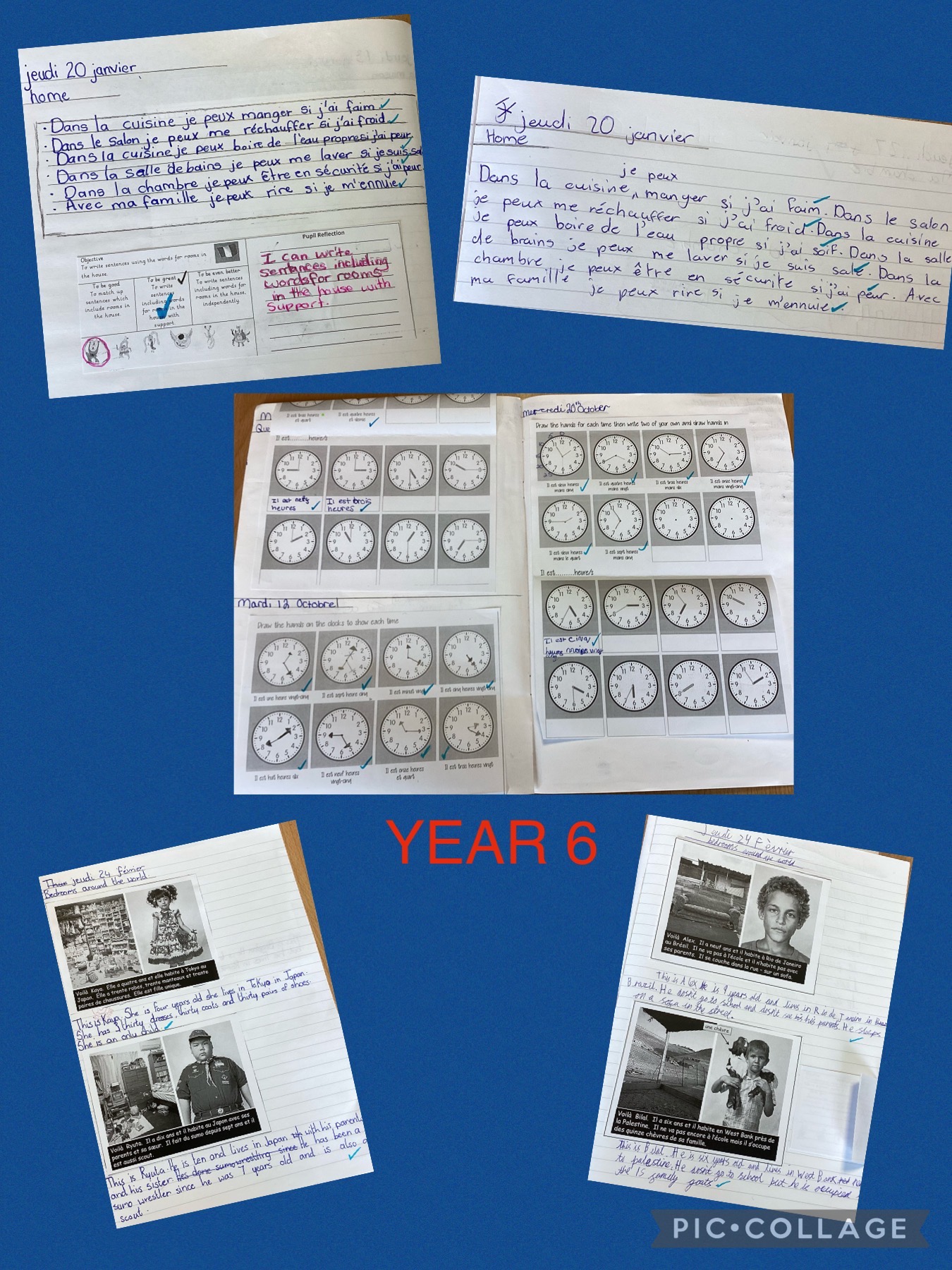
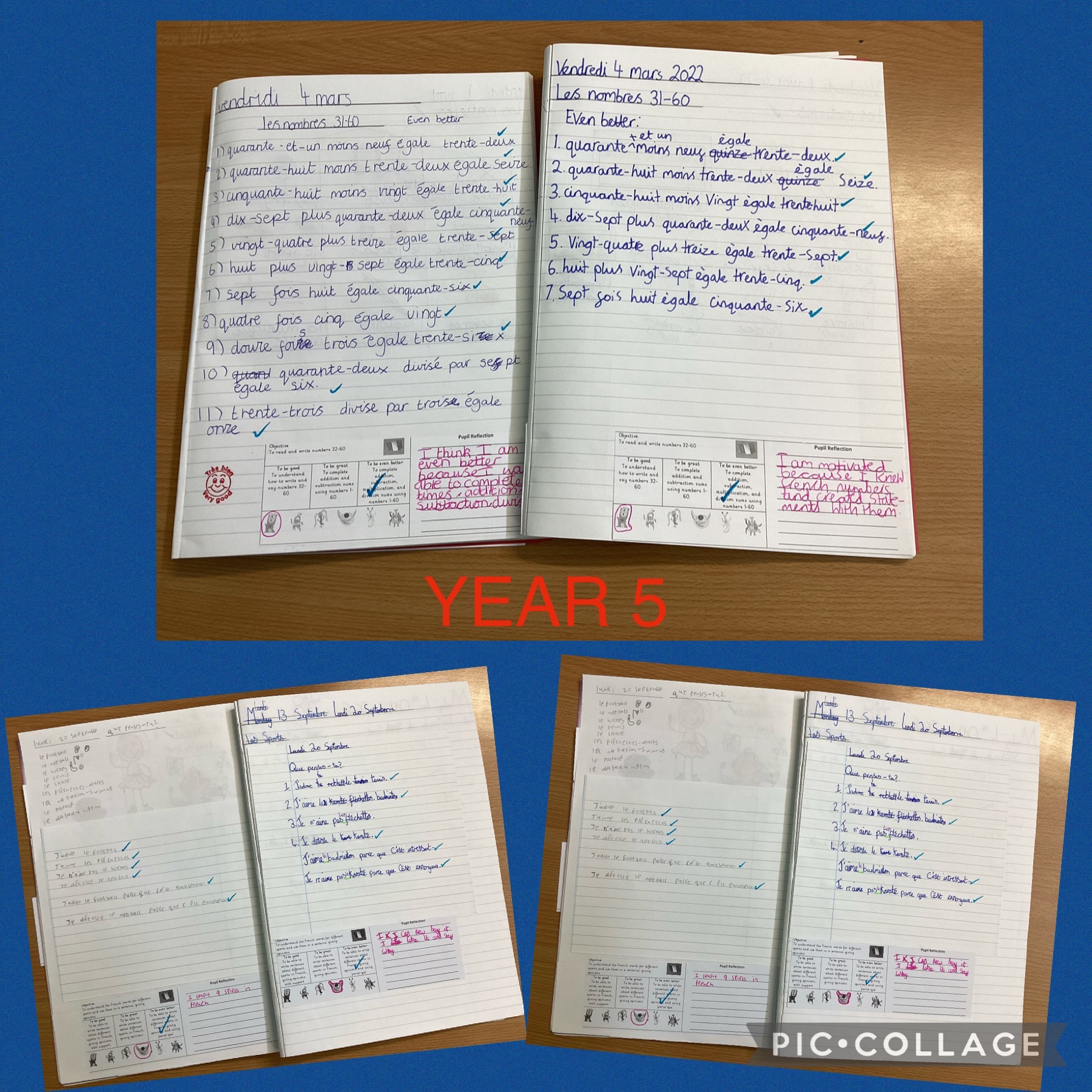
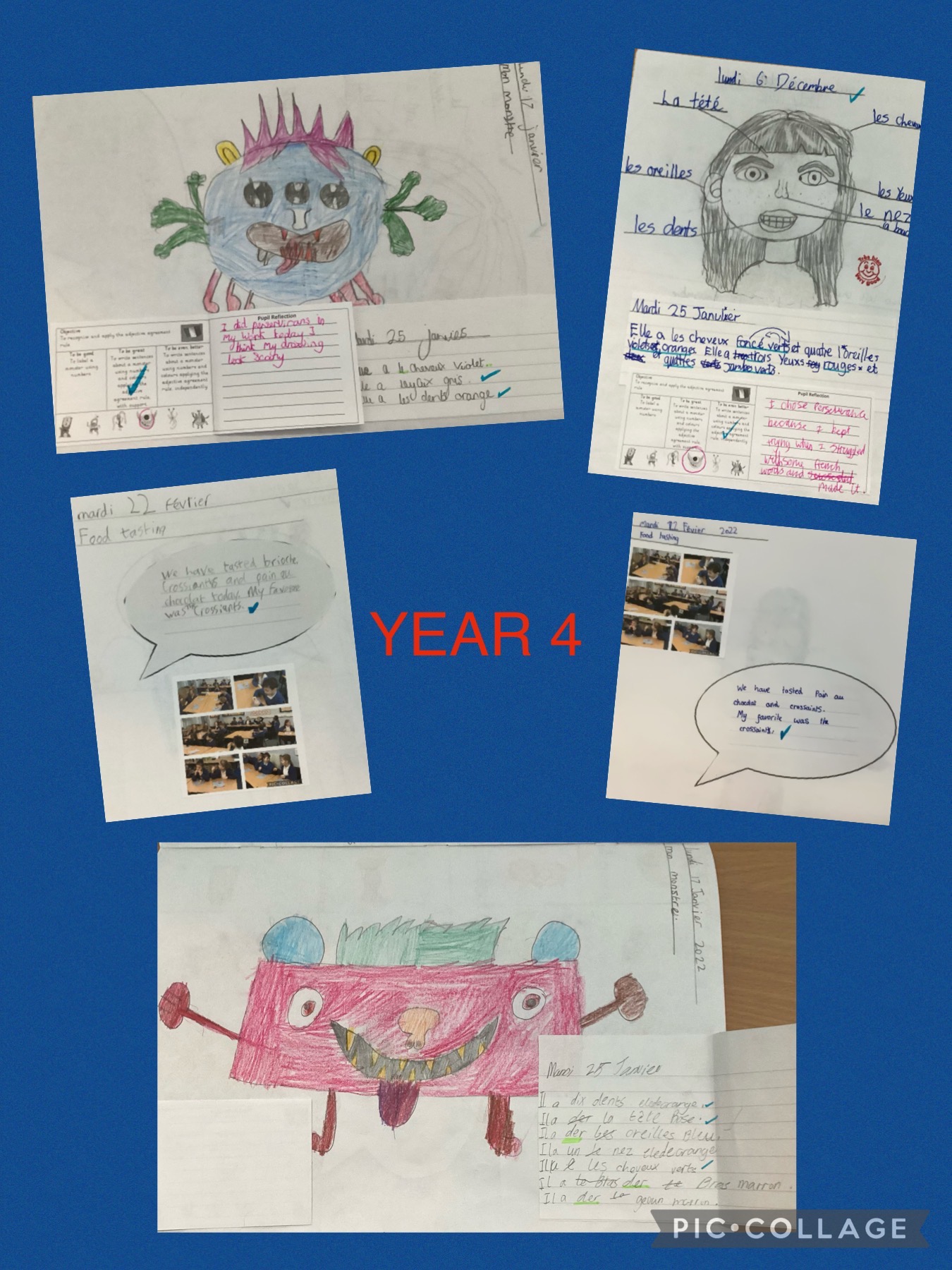
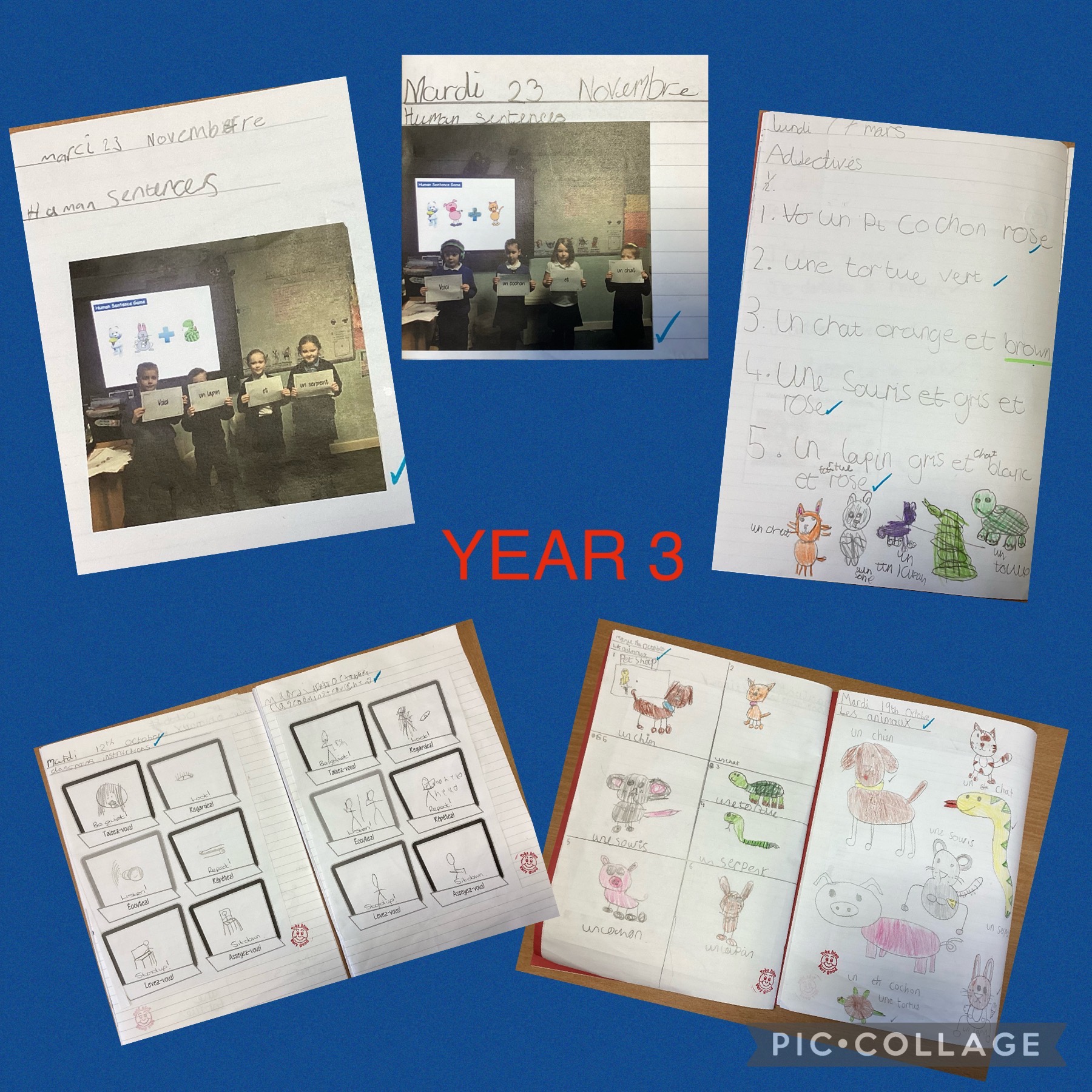
SEND and Inclusion
All teachers are expected to adapt the planning to ensure that all pupils are able to participate fully and as effectively as possible within the framework of the National Curriculum. It must ensure that pupils with disabilities are given activities that are suited to their type of disability without destroying the integrity of the activity.
We have a clear view that every child will be exposed to a full range of activities and experiences irrespective of gender, race or disability.
To ensure that pupils of all abilities make worthwhile progress within languages learning:
- Teachers provide suitable ways for pupils of different abilities to access the difficult ideas: for example, for low-attaining pupils by narrowing the range of information to be used, by increasing the degree of support through their own advice, by using relevant resources, or by the use of other adults.
- Teachers should challenge higher-attaining pupils by expecting them to interrogate more demanding sources, by expecting them to work with greater independence and by raising expectations about how they might communicate their ideas.
- Teachers use a range of teaching styles in each lesson in order to match the range of learning styles represented in a typical class.
Assessment and recording
The following methods of assessment are being used:
- Teacher assessment within the normal classroom as in all curriculum subjects, this is to be completed on a termly basis using FFT
- Module tests provided within the ‘ilanguages’ resource
- Pupil self-assessment
Resources
Monitoring and review
Monitoring of the standards of children’s work and the quality of teaching in languages is the responsibility of the class teacher and the languages subject leader. The work of the languages subject leader also involves supporting colleagues in the teaching of languages, being informed about current developments in the subject and providing a strategic lead and direction for the subject in the school. The languages subject leader evaluates the strengths and weaknesses in the subject and indicates areas for future developments.
The effectiveness of this policy will be reviewed and evaluated by the staff as part of the schools rolling programme. The Head teacher will report the result of the evaluation to the governing body and recommend any policy changes as and when they become necessary.
Health and Safety
All staff will adhere to the school’s health and safety policy. During languages lessons, children will have the opportunity to use many forms of ICT. All the equipment available meets the safety requirements and is used under supervision.
Contribution of teaching and learning in other subjects
English
Languages education contributes significantly to the teaching of English in our school by presenting children with the opportunity to explore differences and similarities between French and English. Pupils develop communication and literacy skills that lay the foundation for future learning. Children will encounter a range of situations, audiences and activities designed to develop competence, accuracy and confidence in speaking and listening. There is an increased focus on the phonics of the language and how this affects the pronunciation of the words. Children will learn some high frequency vocabulary, e.g. days, months, greetings etc. There is also an increased focus on the written language, with the children exploring the grammatical features and forming their own phrases and sentences. Opportunities to compare the language with English or another language can be exploited using the alphabet, phonemes, rhyming patterns, sound/spelling links and dictionary work.
Mathematics
Languages teaching can help consolidate the teaching of mathematics, for example when learning vocabulary including numbers, date, time and money.
ICT
ICT is used in the teaching of languages where appropriate. The program ‘ilanguages’ is used to facilitate the teaching throughout Key Stage. Languages education can also provide an opportunity to create links with schools in other countries using online communication techniques, e.g. Skype, email, social networking sites, etc.
Geography
Languages contributes to the teaching of Geography as children will complete work relating to the study of other countries. Children may also learn vocabulary related to the geography, for example the weather or features of the land.
Music
Children learn new vocabulary through the use of songs in a foreign language.
Citizenship
Languages contribute significantly to the teaching of personal, social, health and citizenship education. The teaching of languages encourages a multilingual society and provides children with knowledge about other countries and cultures.
Spiritual, moral, social and cultural development
The learning of a foreign language provides a valuable educational, social and cultural experience for pupils. There are many opportunities to promote positive attitudes towards language learning through a range of learning activities. Learning another language raises awareness of the multilingual and multicultural world and introduces an international dimension to the pupils’ learning, giving them an insight into their own culture and those of others. The learning of a foreign language also requires that the children participate in many speaking and listening activities, which provides them with many opportunities to interact with each other.
Key Roles
The subject leader will facilitate the development of languages in the following ways:
- Ensuring the all teachers are familiar with the policy and support any lesson planning as required
- Discuss with the Head teacher and the designated governor responsible for languages the progress of implementing the policy in the school
- Audit and monitor resources
- Identify need and arrange INSET with support from the Head teacher when appropriate
- Ensure that all staff are familiar with the resources and planning provided to ensure that all lessons are being delivered to a high standard and that progression is taking place
- Discuss with pupils their work in languages to assess their knowledge and understanding of the subject
- Scrutinise work completed by pupils to ensure that progression is taking place
- Attend relevant INSET provided by the Local Authority
- Liaise with specialist teachers from the local secondary schools
- Work co-operatively with the SENCO where appropriate
The Head teacher will:
- Lead, monitor and manage the implementation of the policy, including monitoring teaching plans and quality of teaching.
- With the designated governor responsible for languages, keep the governing body informed about changes to the policy.
Clubs
Click on the images to enlarge them and learn about the clubs we currently have on offer.